Trustpilot - Rated Excellent
 In-house Design & Print
 Express Production Options
 Instant Credit for Businesses
 Newsletter


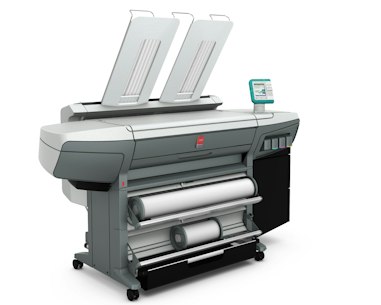
1990s: Large-Format Printing
Digital print transforms the speed and scale of graphics.
Explore large-format printing
Portable displays had already made exhibitions easier to transport. In 1997, the retractable banner stand pushed that idea further: a full-height graphic could disappear into its own base and travel almost anywhere.
By the late 1980s and 1990s, travelling exhibition design was increasingly focused on reducing weight and packing volume. Design Week wrote in 1997 that travelling exhibitions remained important even as electronic communications expanded, while designers were using lightweight materials and modular engineering to create displays that packed into ever smaller spaces.
That is the environment in which the retractable banner stand appears.
A traditional banner needs separate supports, fixings or a frame. A retractable banner stores the graphic inside its own base. Pull the graphic upward, attach it to a support pole and the display is ready. When the event finishes, the graphic rolls back into the cassette.
It is difficult to make an exhibition display much simpler than that.
Read Design Week's 1997 feature on travelling exhibition design
One specific milestone is unusually well documented. Expand International states that it introduced the QuickScreen 1 in 1997 and describes it as the world's first retractable banner stand display. Contemporary suppliers repeat the same 1997 launch history, and trade-show supplier Visual Impact Systems records beginning to supply Expand retractable stands that year.
The design established the format that is still familiar today:
a weighted cassette base;
a graphic stored on a spring-loaded roller;
a support pole;
a top rail holding the graphic upright;
a fold-out foot for stability.
The important innovation is not simply that the banner stands upright. The graphic protects itself during transport because it retracts into the base.
The roller banner solves several exhibition problems at once.
It produces a tall visual surface without needing a wall. It can be installed by one person. The graphic stays attached to the hardware. The complete display occupies very little floor space and can travel in a narrow bag.
That makes it useful far beyond large trade shows. The same hardware can work at conferences, reception areas, product launches, shopping centres, dealer events, recruitment fairs and presentations.
The roller banner is therefore not only an exhibition stand accessory. It becomes a general-purpose portable advertising display.
That versatility is a major reason the format spreads so widely.
The photograph used as this page's featured image was taken in 2009, so it is not presented as a photograph from the 1990s. It is included because it clearly shows the mechanism that made the 1997 format significant.
When packed away, almost the entire printed graphic sits rolled inside the aluminium cassette. A spring mechanism applies tension as the banner is pulled upward and retracts it when released.
That protects the printed surface from creasing and reduces the number of separate parts the exhibitor has to handle.
Later retractable stands added improved feet, interchangeable graphics, adjustable poles, wider formats, double-sided systems and increasingly sophisticated cassettes, but the basic operating principle remains recognisable.
Roller banners are now so common that their origin can feel much older than it is. Earlier portable displays certainly existed, including folding panels, banner frames and pop-up systems.
But the available evidence points to 1997 as the key commercial milestone for the retractable roll-up format, through Expand's QuickScreen 1.
For that reason, this chapter deliberately avoids claiming that roller banners were already commonplace throughout the 1980s or early 1990s. The broader trend towards lightweight portable graphics developed over those decades; the retractable banner stand arrives at the end of that process.
That is a more defensible history than simply saying 'roller banners were invented in the 1980s'.
The retractable banner changes expectations for portable graphics:
One person can carry it.
Setup takes moments rather than a build crew.
The graphic retracts into its own protective housing.
It uses very little floor space.
A full-height brand message can travel in a compact bag.
The same format works inside and outside traditional exhibitions.
Few exhibition products have remained so recognisable for so long.
The next major change is not the hardware. It is what gets printed onto it.
As large-format digital printing improves through the 1990s, producing colourful exhibition graphics becomes faster, cheaper and far more flexible.
Expand International: Celebrating 20 Years of the Expand QuickScreen 1
Google Patents: later retractable banner stand patent background
Expand International describes the QuickScreen 1, introduced in 1997, as the first retractable banner stand. This page attributes that claim to Expand rather than presenting an undocumented inventor story as independent fact. Earlier portable banner and panel displays existed, but the available sources consistently identify 1997 as the commercial debut of the modern retractable roll-up format.
The featured mechanism photograph dates from 2009 and is public domain. It is included to explain how a retractable banner packs away, not as evidence of what a 1997 QuickScreen looked like.
Digital print transforms the speed and scale of graphics.
Explore large-format printingScreens add motion, video and digital content to stands.
Explore screens entering the standInteractive technology turns visitors into active participants.
Explore the experience eraExhibitions become more flexible, connected and reusable.
Explore how exhibitions adaptedThe earliest visual communication on shared physical surfaces.
Explore cave artPermanent communities create new spaces for exchange and display.
Explore early settlementsAgoras and forums bring sellers, buyers and ideas together.
Explore ancient marketplacesRecurring fairs begin to resemble organised trade events.
Explore medieval trade fairs