Screens and multimedia technology on exhibition stands

2020-2026: Exhibitions Adapt

A History of Trade Shows

Between 2020 and 2026, exhibitions changed faster than at almost any other point in their history. The industry absorbed disruption, redesigned how people moved through venues, experimented with digital formats and then rebuilt a busy physical event calendar around new expectations.

2020 changes the operating environment

The exhibition industry did not simply disappear in 2020. It adapted under extreme pressure.

Events were cancelled, postponed, reduced, relocated or reorganised. Some organisers used online or hybrid formats, but the bigger story was operational: venues, suppliers and exhibitors had to rethink how people entered, moved through and interacted with event spaces.

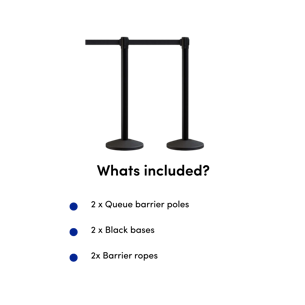
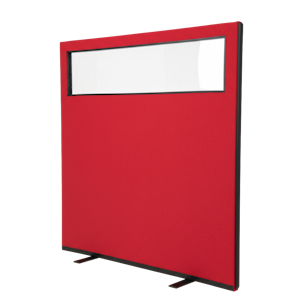
Queue management, directional signage, temporary barriers, screens, hygiene messaging and flexible layouts suddenly mattered in a different way. Products that had previously been routine event infrastructure became part of managing confidence, access and visitor flow.

The effect on the wider industry was severe. UFI/JWC data later estimated global exhibition revenue at around €11 billion in 2020, compared with roughly €38 billion in 2019. But that was the start of a transition, not the end of exhibitions.

Practical display products take on new roles

Digital became an option, not a replacement

Online and hybrid events were an important part of the industry's response, particularly when travel and venue access were restricted. But the period did not prove that physical exhibitions were obsolete.

Instead, it clarified which parts of an event work well digitally and which are difficult to reproduce. Presentations can be streamed. Meetings can happen over video. Product information can be downloaded remotely.

But exhibitions still have several advantages that are inherently physical:

  • seeing a product at full scale;

  • live demonstrations;

  • spontaneous conversations;

  • comparing several suppliers in one place;

  • building trust face to face;

  • experiencing the atmosphere of an industry gathering.

Digital tools therefore became increasingly integrated around physical events rather than simply replacing them.

2021-2023: the calendar rebuilds

The recovery was progressive rather than immediate. UFI's European statistics did not publish a normal 2020 edition because of the disruption, while the 2021 edition was reduced and expanded to include online and hybrid events.

Industry revenue then climbed sharply. UFI/JWC estimates put global exhibition revenue at roughly €17 billion in 2021, €29 billion in 2022 and back to approximately €38 billion in 2023.

Those numbers need context: inflation contributed to the 2023 revenue comparison. Even so, the direction is clear. Exhibitors and visitors returned in large numbers, venues became busy again and physical events re-established themselves as an important part of the marketing mix.

What returned was not exactly the 2019 industry. Exhibitors came back with different expectations around flexibility, measurement, digital content and the value of face-to-face time.

Stands become more flexible and reusable

One of the clearest design trends across the period is flexibility. Exhibitors increasingly want systems that can work across several footprints rather than a one-off stand that is discarded after one event.

That strengthens demand for:

  • modular exhibition structures;

  • replacement graphics;

  • fabric systems;

  • portable counters and furniture;

  • LED lightboxes;

  • reusable queue and wayfinding products;

  • components that can be stored and reconfigured.

The idea is not new. Reuse has been part of exhibition design for decades. What changes is the priority placed on it. Cost pressure, sustainability and the need to react quickly to changing event programmes all reward systems that can adapt.

Display Wizard's product range reflects that shift

Display Wizard's current range provides a useful practical snapshot of how broad the modern display market has become. Alongside traditional exhibition products such as roller banners and pop-up stands, the range now includes queue barriers, office partitions, outdoor displays, digital signage, LED lightboxes and modular exhibition systems.

That breadth makes sense in the context of 2020-2026. Modern events need more than a backwall. They need wayfinding, crowd management, screens, lighting, flexible architecture, branded outdoor space and graphics that can be changed without replacing the entire structure.

Current Display Wizard categories include Queue Barriers, Indoor Displays, Outdoor Displays and Outdoor Signage.

These are examples of the wider industry adapting its product mix, not evidence that the period was defined by one company.

By 2024, the conversation had moved on

UFI's January 2024 Global Exhibition Barometer is particularly revealing. Only 2% of surveyed companies selected the impact of Covid-19 as one of their most important business issues.

Instead, attention had shifted towards the economy, geopolitical uncertainty, competition, sustainability and internal management. Digitalisation remained relevant, but it was now part of normal business development rather than an emergency response.

That is perhaps the clearest sign that the exhibition industry had adapted.

The defining question was no longer 'can exhibitions operate?'

It was once again 'how should exhibitions improve?'

2026: the calendar is full again

Display Wizard's own UK exhibition calendar provides a useful snapshot of the physical event market in 2026.

Its autumn schedule alone includes events such as:

  • The Print Show at the NEC, 29 September-1 October 2026;

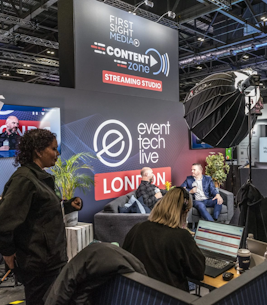
  • Event Tech Live at ExCeL London, 11-12 November 2026;

  • B2B Marketing Live at ExCeL London, 18-19 November 2026;

  • London Build Expo at ExCeL London, 25-26 November 2026;

  • Advanced Engineering at the NEC, 4-5 November 2026;

  • WTM London at ExCeL London, 3-5 November 2026.

These are not niche exceptions. They sit inside a calendar covering hundreds of events across sectors including engineering, retail, healthcare, travel, education, technology and construction.

Browse the Display Wizard UK Exhibition Calendar

The physical exhibition did not simply 'return'

It is tempting to describe 2022 onwards as the return of physical exhibitions. That is too simple.

Physical events continued in different forms and different markets throughout the disruption, while the recovery varied dramatically by country and sector. More importantly, the exhibition format that emerged afterwards had changed.

By 2026, the physical stand is increasingly expected to work alongside:

  • CRM and lead-capture systems;

  • event apps;

  • social content;

  • digital signage;

  • livestreaming and recorded video;

  • reusable modular hardware;

  • measurable visitor interactions.

The physical and digital sides of exhibiting are no longer opposing ideas. They are parts of the same event strategy.

Why 2020-2026 matters to exhibition history

This period compresses several decades of change into just a few years:

  • Events become more operationally flexible.

  • Visitor flow and temporary infrastructure receive greater attention.

  • Digital and hybrid tools become part of normal event planning.

  • Reusable and adaptable stands become increasingly attractive.

  • Sustainability becomes a more visible business issue.

  • Event technology moves deeper into the physical show floor.

  • Face-to-face exhibitions prove they still offer something difficult to reproduce online.

By 2026, the exhibition has not become virtual and it has not simply returned to its old form.

It has adapted.

Sources & further reading

Historical note

The 2020-2026 period varied significantly by country, event type and local restrictions. This page therefore avoids describing the industry as either completely closed or simply 'returned'. UFI revenue figures are global estimates and later-year values include forecasts. The 2023 comparison also reflects inflation as well as underlying market recovery.

Image note

The Display Wizard product and event images on this page are contemporary supporting examples from the current CMS. They illustrate how the modern exhibition ecosystem operates; they are not presented as photographs taken specifically during the 2020 disruption.

Explore More History