
 Trustpilot - Rated Excellent
 In-house Design & Print
 Express Production Options
 Instant Credit for Businesses
 Newsletter


40,000 BC and Earlier: Cave Art and the Origins of Visual Communication
A History of Trade Shows
Before printed signs, banners or screens, humans were already using physical spaces to present images and ideas.
- Home
- A History of Trade Shows
- 40,000 BC and Earlier: Cave Art and the Origins of Visual Communication
Before displays, humans were already communicating visually
Nobody was selling exhibition stands 40,000 years ago. There were no roller banners, branded counters or trade halls. But people were already using fixed physical surfaces to leave images for other people to see.
Cave and rock art is therefore not a trade display in the modern commercial sense. It is useful to the history of display because it shows a much older behaviour: choosing a visible surface, placing imagery on it and creating something that could be seen and interpreted after the maker had gone.
That distinction matters. We can connect the behaviour to the later history of visual display without pretending prehistoric artists were advertisers.


The first marks left for others to see
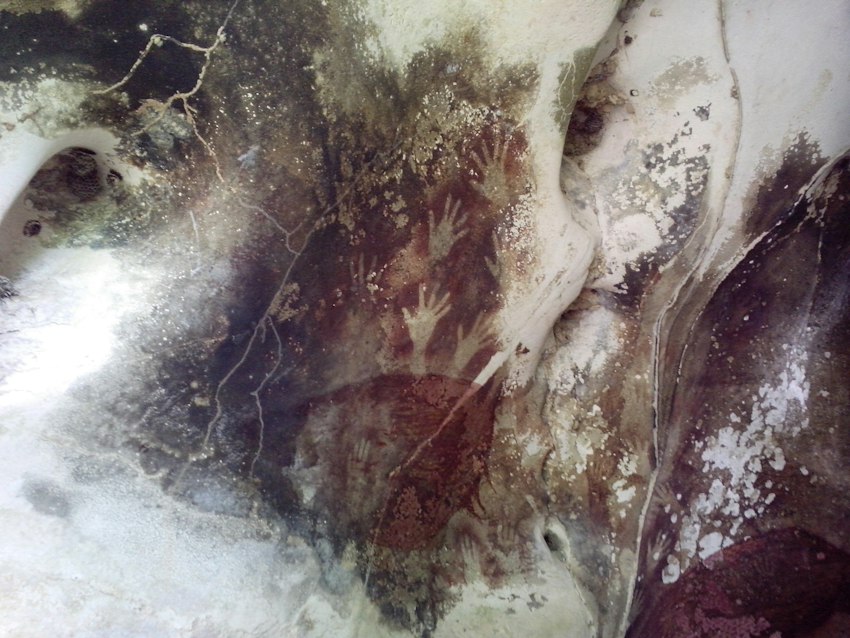
The hand stencils at Pettakere Cave in South Sulawesi are a striking example of humans deliberately placing marks onto a shared rock surface.
We cannot know exactly what every handprint meant. It may have marked identity, community, ritual, memory or something else entirely. What we can say is that the image was intentionally placed where it could remain visible.
A 2024 study in Nature dated a narrative scene at Leang Karampuang in Sulawesi to at least 51,200 years ago, making it the earliest known surviving example of representational art and visual storytelling currently identified.
Image: Cahyo / Wikimedia Commons, CC BY-SA 3.0. View the original and licence.

The wall became part of the message
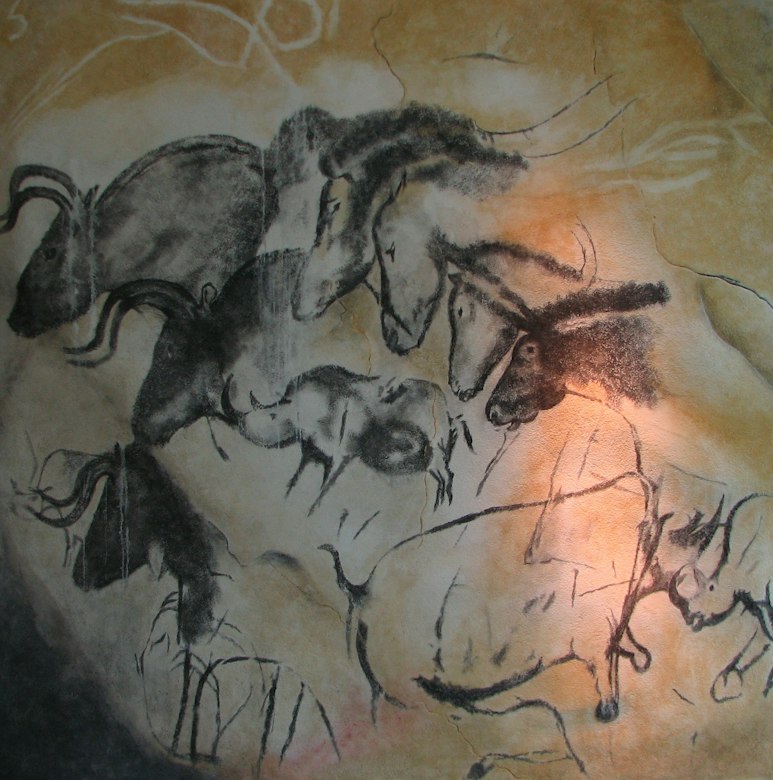
At Chauvet Cave in France, prehistoric artists used the contours and surfaces of cave walls as part of the composition itself.
UNESCO records more than 1,000 images at Chauvet, including lions, mammoths, rhinoceroses, bears and bison. Much of the art dates to roughly 30,000-32,000 years before present.
Read the UNESCO World Heritage record for Chauvet
Image: HTO / Wikimedia Commons. Museum replica. Public Domain. View the original file.jpg).

Images begin to tell stories
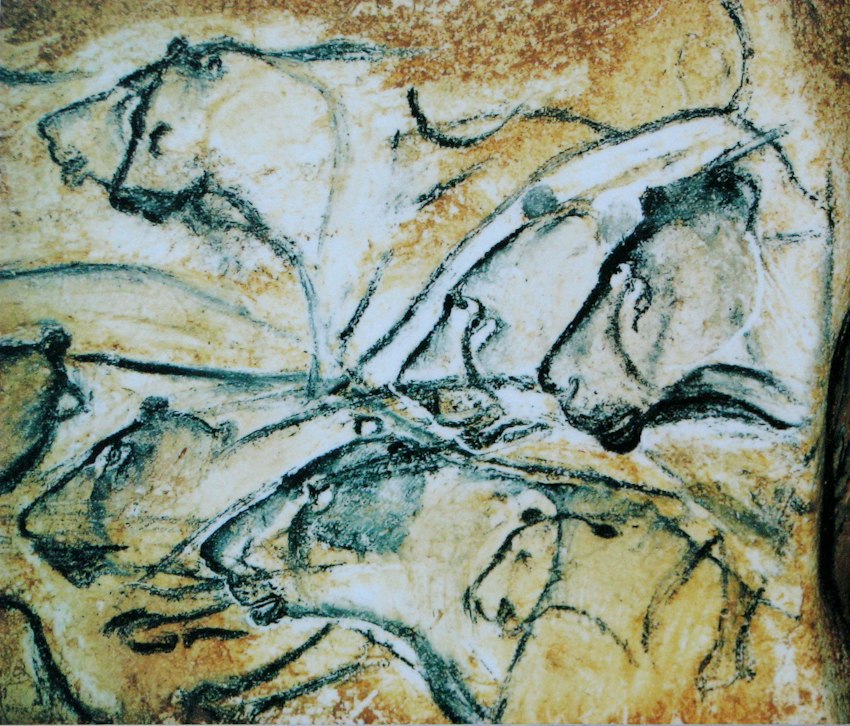
The lions at Chauvet show how imagery could be arranged to suggest motion, interaction and sequence. Researchers remain cautious about assigning meanings that cannot be proven, but some surviving panels clearly demonstrate deliberate visual composition.
The Sulawesi research is especially important because it provides evidence of early visual storytelling: an image could communicate even when its maker was no longer physically present.
Image: HTO / Wikimedia Commons. Museum replica. Public Domain. View the original file.jpg).


What does this have to do with displays?
We should not call a prehistoric cave wall an exhibition stand. The purpose, audience and meaning were fundamentally different.
But there is a recognisable thread running through the history of human communication:
choose a surface;
create imagery;
place it where people can see it;
use that imagery to communicate something.
Thousands of years later, those same basic principles appear in signs, shop windows, posters, exhibition graphics, digital screens and branded spaces.
The technology changed. The need to communicate visually did not.
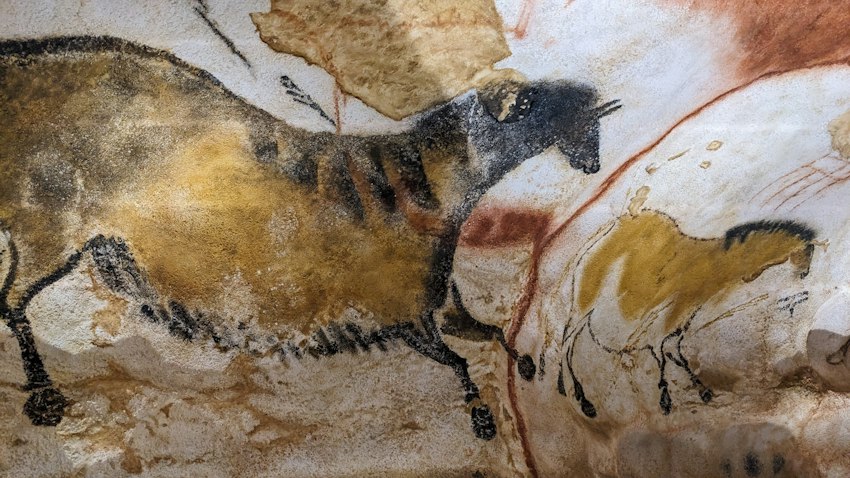
Image: Eline13Viki+ / Wikimedia Commons, CC0 1.0. View the original and licence.
