Trustpilot - Rated Excellent
 In-house Design & Print
 Express Production Options
 Instant Credit for Businesses
 Newsletter







600 BC: The Ancient Marketplace
Agoras and forums bring sellers, buyers and ideas together.
Explore ancient marketplaces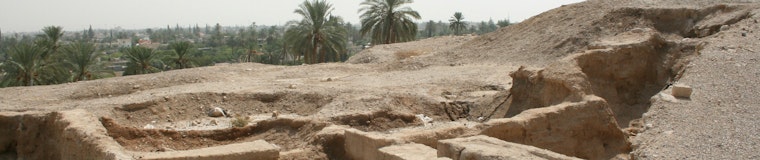
As permanent settlements grew, people increasingly lived, made, stored and exchanged goods in shared communities. That changed how objects could be seen, compared and valued.
Around the end of the last Ice Age, communities in parts of Southwest Asia were becoming more settled. That shift did not create shops or merchandising in the modern sense, but it did change the conditions in which objects were made, stored, exchanged and seen.
At Ancient Jericho, archaeological deposits begin around 10,500 BC, and by the 9th to 8th millennium BC a sizeable permanent settlement had developed. UNESCO highlights this transition to sedentary communal life as one of the site's defining features.
For the history of display, the important change is simple: goods were no longer only carried by mobile groups. Increasingly, they existed within permanent shared places where other people could encounter, compare and value them.
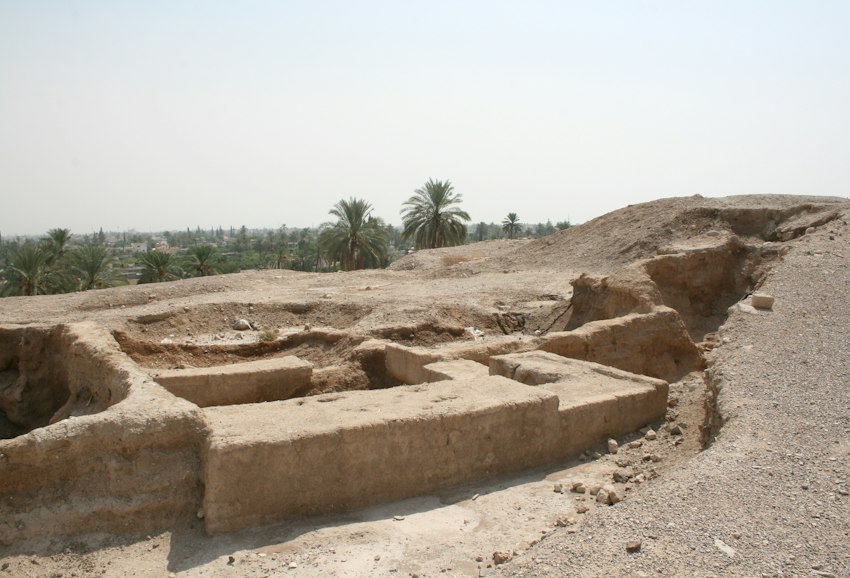
Ancient Jericho, or Tell es-Sultan, is one of the clearest archaeological examples of the transition towards settled communal life in the Levant.
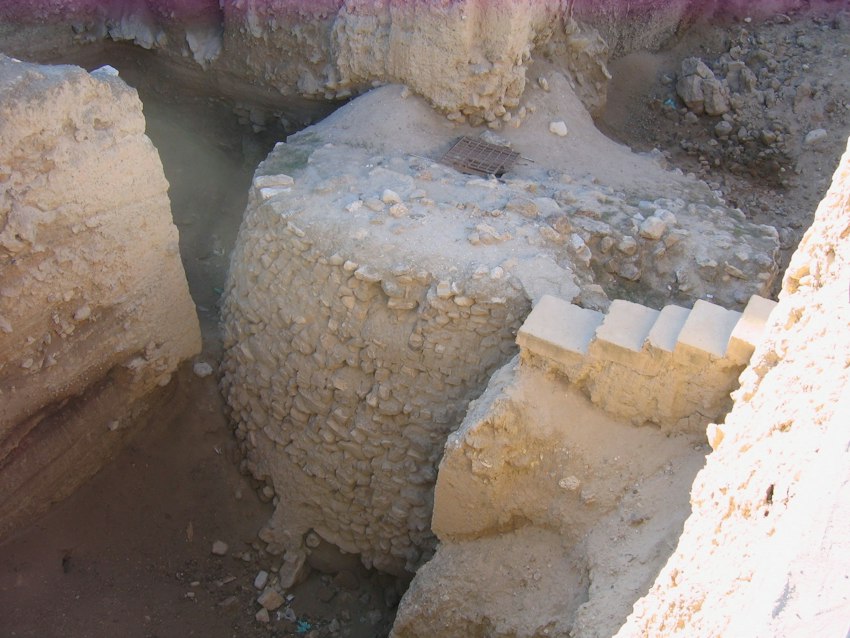
UNESCO records occupation at the site from about 10,500 BC. By the 9th to 8th millennium BC it had become a substantial permanent settlement with shared architecture, including a wall, ditch and tower.
A permanent settlement creates something a mobile camp cannot in the same way: recurring shared space. Tools, raw materials, food, ornaments and household objects can be stored, revisited, exchanged and seen by a larger community over time.
That does not prove people arranged goods to attract buyers. It does, however, create the physical and social conditions in which presentation and comparison become increasingly plausible.
Read the UNESCO World Heritage record for Ancient Jericho
Image: Diego Delso / Wikimedia Commons, CC BY-SA 3.0. View the original and licence.
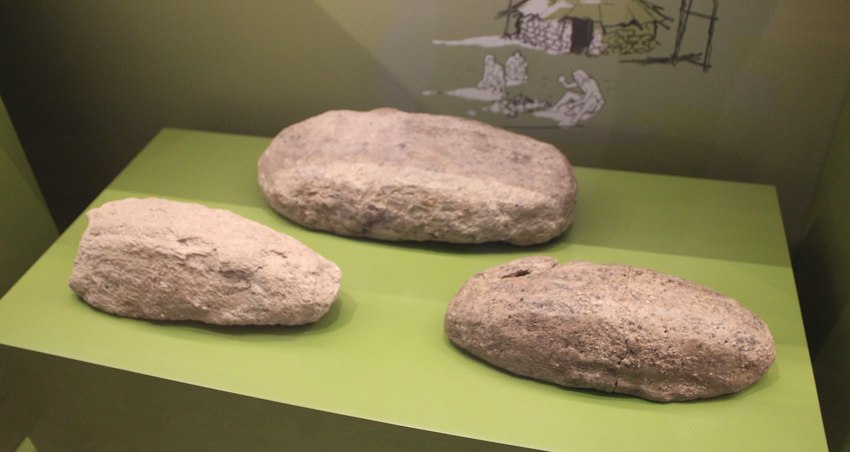
These mud bricks from Jericho date to around 9000 BC and come from one of the earliest known traditions of permanent house construction at the site.
Architecture matters to the history of display because permanent buildings created fixed interiors, storage areas, work spaces and communal zones. Objects could now remain in recognisable places rather than travelling constantly with their owners.
That may sound obvious, but it is a major step. Display requires more than an object. It requires a place where the object can be encountered.
We should still resist projecting modern retail backwards. Archaeology cannot show us a Neolithic shop window or sales counter. What it can show is the emergence of enduring places in which material goods became part of everyday communal life.
Image: Zunkir / Wikimedia Commons, CC BY-SA 4.0. View the original and licence.
The strongest evidence for early exchange comes from materials that can be traced back to distant geological sources. Obsidian is especially useful because its chemical signature can often identify where it originated.
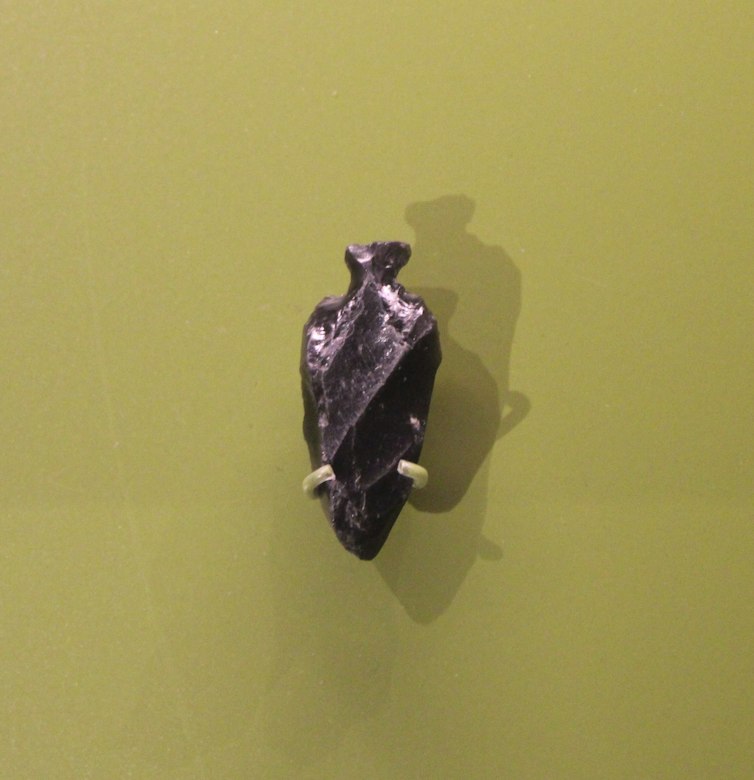
This Neolithic obsidian object from Jericho is made from material sourced in eastern Turkey, roughly 1,000 km away. It dates later than our 10,000 BC starting point, to around 8500-6500 BC, but it demonstrates how far-reaching these exchange systems became.
Research also shows that obsidian was already present at Natufian and Pre-Pottery Neolithic A sites before formalised trade networks developed. Scholars describe it as moving through existing social networks of material and information exchange.
This is an important distinction: early exchange was not necessarily 'commerce' as we understand it, but valuable objects were moving between communities long before money, shops or trade fairs existed.
Read the Antiquity study on early Neolithic exchange networks
Image: Zunkir / Wikimedia Commons, CC BY-SA 4.0. View the original and licence.
Not in any form we can prove. There is no archaeological evidence for a 10,000 BC market stall with neatly arranged goods and someone pitching the benefits.
But the foundations of product display were becoming possible:
people were living together in larger permanent communities;
objects could remain visible within shared spaces;
specialised materials and crafted goods moved between regions;
some objects clearly carried value beyond simple everyday utility.
Once goods are exchanged, people need ways to identify, compare, assess and value them. Presentation eventually becomes part of that process, even if the earliest stages are invisible to archaeology.
So the history lesson here is not that visual merchandising began in 10,000 BC. It is that settled communities and exchange networks created the social setting from which product presentation could eventually emerge.
Image: Reinhard Dietrich / Wikimedia Commons, Public Domain. View the original file.
UNESCO World Heritage Centre: Ancient Jericho/Tell es-Sultan
Antiquity: The flow of ideas: shared symbolism during the Neolithic emergence in Southwest Asia
Cambridge Archaeological Journal: research on Neolithic obsidian trade
The Jericho site image is CC BY-SA 3.0. The PPNA brick and obsidian photographs by Zunkir are CC BY-SA 4.0. The Tower of Jericho photograph by Reinhard Dietrich is public domain.
Agoras and forums bring sellers, buyers and ideas together.
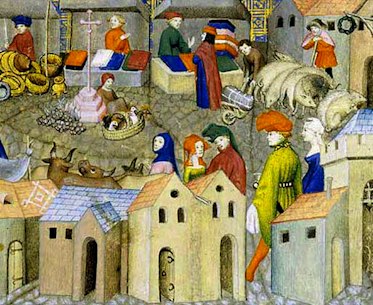
Explore ancient marketplacesRecurring fairs begin to resemble organised trade events.
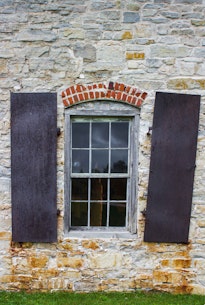
Explore medieval trade fairsRetailers discover the selling power of street-facing displays.
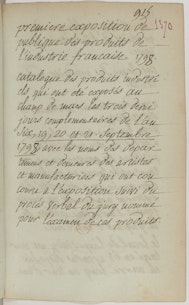
Explore shop window displaysManufacturers publicly demonstrate industrial capability.
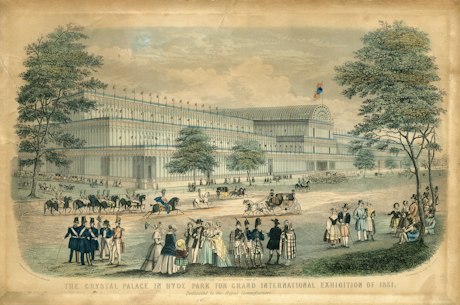
Explore the 1798 industrial exhibitionThe Crystal Palace turns exhibiting into a global spectacle.
Explore the Great ExhibitionArchitecture itself becomes part of the exhibition experience.
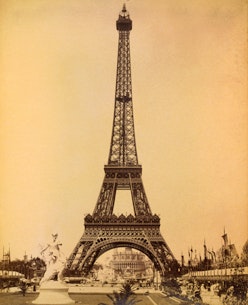
Explore the 1889 Paris ExpositionChicago combines industry, spectacle and visitor entertainment.
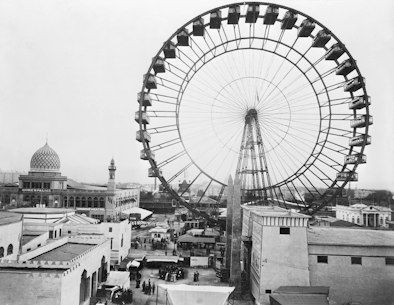
Explore the 1893 Chicago fairIndustry-specific shows create the modern trade-show model.
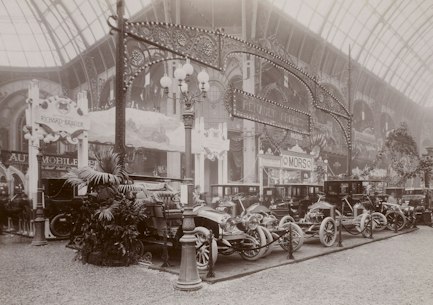
Explore early specialist trade shows