 Trustpilot - Rated Excellent
 In-house Design & Print
 Express Production Options
 Instant Credit for Businesses
  Newsletter
Customer feedback is one of the most valuable resources a business can use to refine and strengthen its marketing. While many companies invest heavily in campaigns, creative assets, and advertising strategies, far fewer consistently use real customer insight to shape those efforts.
Feedback provides a direct line into how audiences perceive your brand, what they value, and where friction exists in their experience. It removes guesswork from marketing decisions and replaces it with evidence-based insight.
In an increasingly competitive environment, brands that actively listen and respond to their customers gain a significant advantage. They are able to adjust messaging, improve targeting, and refine positioning based on real-world input rather than assumptions.
This approach is especially important when considering post-event marketing strategies, where feedback gathered during and after live experiences can directly influence future campaigns and engagement approaches.
Why Customer Feedback Matters in Marketing
Customer feedback plays a critical role in understanding how marketing is actually received. While internal teams may believe a campaign is clear or compelling, only the audience can confirm whether that is truly the case.
Feedback helps bridge the gap between intent and perception. It reveals whether messaging is landing as expected or if adjustments are needed.
There are several key reasons why feedback is so valuable:
1. It reveals customer perception
Brands often see themselves differently from how customers see them. Feedback highlights these differences and provides clarity.
2. It identifies strengths and weaknesses
Customers are quick to point out what they like and dislike. This helps marketers understand which elements of a campaign are working and which are not.
3. It improves targeting
Feedback can reveal whether you are reaching the right audience or attracting the wrong type of attention.
4. It supports continuous improvement
Marketing is not static. Feedback allows campaigns to evolve and improve over time rather than remaining fixed.
When used correctly, feedback becomes a continuous optimisation tool rather than a one-off evaluation.
Types of Customer Feedback You Can Use
Customer feedback comes in many forms, and each type offers different insights.
Direct feedback
This includes surveys, interviews, reviews, and structured questionnaires. It provides clear, intentional responses from customers.
Indirect feedback
This comes from behavioural data such as website analytics, click-through rates, social media engagement, and purchasing patterns. It shows what customers do rather than what they say.
Unsolicited feedback
This includes spontaneous comments on social media, emails, or conversations with sales and support teams. It is often the most honest and emotionally driven.
Event-based feedback
Feedback collected during or after events, such as trade shows or exhibitions, is particularly valuable because it reflects real-time engagement and experience. By engaging with real customers face-to-face, you can create informed post-event marketing strategies that support your company long after the event is over.
Each type contributes a different layer of understanding, and the most effective strategies combine all four.
How to Collect Effective Customer Feedback
Collecting feedback is only useful if it is structured in a way that generates actionable insights.
Ask the right questions
Open-ended questions often produce more valuable insights than simple yes/no responses. For example, asking “What could we improve?” tends to reveal more than rating scales alone.
Time it correctly
Feedback is most valuable when collected shortly after an interaction or experience, while impressions are still fresh.
Use multiple channels
Different customers prefer different methods of communication. Surveys, email, social media, and in-person conversations all play a role.
Keep it simple
Long or complex surveys often result in lower response rates. Simplicity encourages participation and improves data quality.
The goal is not just to collect feedback, but to collect meaningful feedback that can inform decision-making.
Turning Feedback into Actionable Marketing Insights


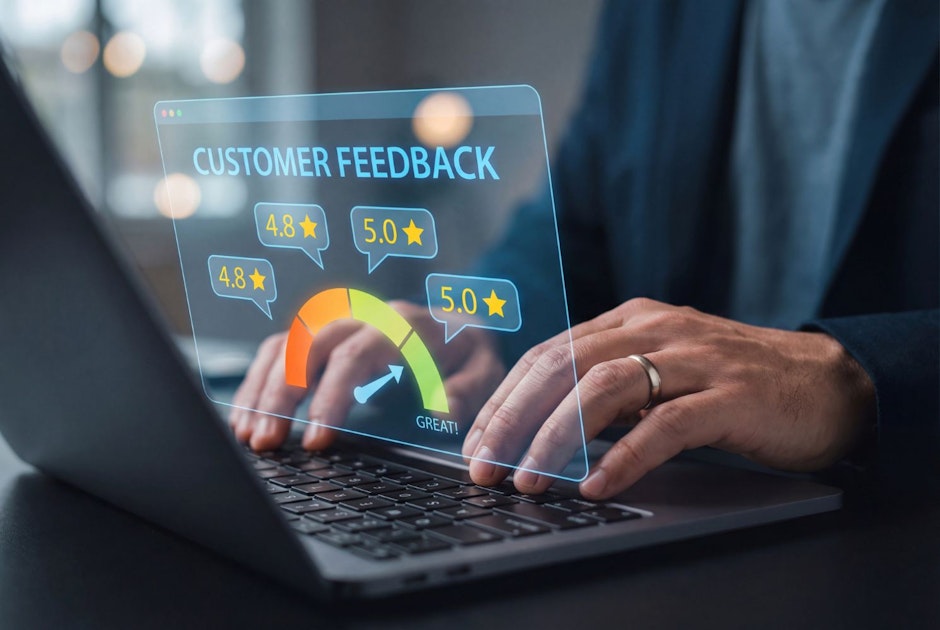
Collecting feedback is only the first step. The real value comes from how it is analysed and applied.
Identify patterns
Look for recurring themes across multiple responses. One comment may be anecdotal, but repeated feedback signals a trend.
Segment feedback by audience type
Different customer groups may have different experiences and expectations. Segmenting feedback helps tailor improvements more effectively.
Link feedback to performance metrics
Combine qualitative feedback with quantitative data such as conversion rates or engagement levels to get a fuller picture.
Prioritise actionable changes
Not all feedback can or should be acted upon immediately. Focus on changes that will have the greatest impact on customer experience or marketing performance.
Systematically analysing feedback will help businesses turn raw opinions into strategic direction.
Using Customer Feedback to Improve Campaign Performance
Customer feedback can directly improve the effectiveness of marketing campaigns in several ways.
Refining messaging
If customers consistently misunderstand a message, it may need to be simplified or reworded.
Improving targeting
Feedback can reveal whether campaigns are reaching the right audience or attracting irrelevant traffic.
Enhancing creative direction
Visual and emotional feedback helps guide design choices, ensuring campaigns resonate more effectively.
Optimising channels
Customers often indicate which platforms they prefer, helping marketers allocate resources more effectively.
Campaigns can become more aligned with audience expectations and behaviours when feedback is consistently applied.
Customer Feedback in Physical Marketing Environments
Feedback is not limited to digital channels. It is equally important in physical marketing environments such as trade shows, exhibitions, and retail spaces.
Visitors at events often provide immediate reactions that can be used to refine future stand designs, messaging, and engagement strategies. These insights are particularly valuable because they come from real-time interactions.
For example, observing how visitors engage with displays can highlight whether messaging is clear, whether layouts encourage interaction, and whether the overall experience is effective.
High-quality visual tools also play a role in shaping perception. Using Display Wizard LED lightbox displays can enhance visibility and create strong focal points, making it easier to gauge visitor engagement and gather meaningful feedback based on interaction patterns.
How Feedback Supports Long-Term Marketing Strategy
Over time, customer feedback contributes to broader strategic improvements. It helps businesses refine their positioning, messaging, and customer experience.
Improving brand messaging
Consistent feedback can reveal whether your brand is communicating clearly and effectively.
Strengthening customer relationships
Acting on feedback shows customers that their opinions matter, which helps build loyalty.
Guiding product or service development
Marketing feedback often overlaps with product insights, helping businesses improve offerings based on real needs.
Supporting data-driven decision-making
Feedback ensures that marketing decisions are grounded in real customer experience rather than assumptions.
This long-term application of feedback helps create more resilient and adaptive marketing strategies.
Common Mistakes When Using Customer Feedback
Despite its value, customer feedback is often underused or misused.
One common mistake is collecting feedback but failing to act on it. This can lead to customer frustration and disengagement.
Another issue is over-relying on a small sample of feedback, which may not represent the broader audience.
Some businesses also focus too heavily on negative feedback, overlooking positive insights that can be just as valuable.
Finally, failing to integrate feedback into a broader marketing strategy limits its impact and reduces its long-term value.
Avoiding these mistakes ensures that feedback becomes a genuine driver of improvement.
Turning Customer Insight into Marketing Advantage
Customer feedback is one of the most powerful tools available for improving marketing performance. It provides direct insight into how audiences perceive your messaging, experience your brand, and respond to your campaigns.
When used effectively, feedback transforms marketing from a one-way communication process into a continuous loop of learning and improvement.
By integrating insights into post-event marketing strategies, businesses can refine their approach after every interaction, ensuring that future campaigns are more targeted, relevant, and effective.
Ultimately, the brands that succeed long-term are those that listen closely, adapt quickly, and consistently evolve based on what their customers are telling them.
posted in Marketing Advice
Published: | Updated:


Written By:
Peter Symonds
Peter Symonds is Managing Director at Display Wizard, a Preston based display and exhibition stand provider.
He has over 15 years of experience in the large format print and exhibition industry and has helped grow Display Wizard into one of the UK's leading provider of high-quality display solutions.
Share this Event