
 Trustpilot - Rated Excellent
 In-house Design & Print
 Express Production Options
 Instant Credit for Businesses
  Newsletter
Marketing often sits in a tension between two forces: creativity and strategy. On one side, creativity drives originality, emotional connection, and memorability. On the other, strategy ensures consistency, purpose, and measurable results. When either side dominates too heavily, marketing tends to lose effectiveness.
Overly creative campaigns can look impressive but fail to deliver clear messaging or business outcomes. Overly strategic campaigns, meanwhile, can become rigid, predictable, and forgettable. The most successful marketing sits in the balance between the two.
Striking this balance is increasingly important in modern environments where audiences are exposed to constant messaging. Brands need to be distinctive enough to capture attention, but structured enough to guide decision-making. And here’s how you can make yours stand out!
Understanding Creativity in Marketing
Creativity in marketing is about more than visual design or clever slogans. It is the ability to present ideas in a way that feels fresh, engaging, and emotionally resonant.
Creative marketing often focuses on:
Storytelling and narrative
Emotional appeal
Unique visual concepts
Unexpected messaging angles
When used effectively, creativity helps brands stand out in crowded markets. It captures attention and creates memorable impressions that differentiate a brand from competitors.
However, creativity without direction can quickly become inconsistent. Without strategic grounding, creative ideas may fail to communicate a clear message or support wider business goals.
Understanding Strategy in Marketing
Strategy provides structure and direction. It ensures that marketing efforts are aligned with business objectives and targeted toward the right audience.
Strategic marketing typically involves:
Defining clear goals and outcomes
Identifying target audiences
Positioning the brand effectively
Selecting appropriate channels and timing
Strategy ensures that creative output is not just visually appealing but also purposeful and measurable.
Without strategy, marketing can become fragmented. Campaigns may look good individually but fail to contribute to long-term growth or brand positioning.
Why Balance Matters
Balancing creativity and strategy is essential because each element supports the other.
Creativity without strategy can result in ideas that are engaging but ineffective. Strategy without creativity can result in messaging that is correct but uninspiring.
When both are aligned, marketing becomes both impactful and purposeful. Creative ideas are guided by strategic intent, while strategy is enhanced by engaging execution.
This balance also improves consistency across campaigns. It ensures that all marketing activity contributes to a unified brand experience while still allowing space for innovation.
How to Integrate Creativity into Strategic Planning
One of the most effective ways to balance creativity and strategy is to embed creative thinking within the planning process rather than treating it as a separate stage.
This involves:
Allowing creative input during early strategy development
Encouraging brainstorming within defined objectives
Setting clear boundaries without restricting exploration
When creative teams understand strategic goals from the outset, their ideas are more likely to align with desired outcomes.
This approach ensures that creativity is purposeful rather than decorative.
How Strategy Can Support Creative Execution
Just as creativity benefits from strategic input, strategy benefits from creative execution. A well-planned campaign still needs compelling delivery to be effective.
Strategy provides:
Direction for messaging
Clarity on audience targeting
Structure for campaign rollout
Creativity brings:
Engagement and emotional impact
Differentiation from competitors
Memorable storytelling
Together, they create campaigns that are both coherent and compelling.
Structured messaging can be enhanced through visually engaging formats such as compact promotional display systems, which allow creative ideas to be delivered in a clear and visually impactful way.
Common Challenges in Balancing Creativity and Strategy
Many organisations struggle to balance these two elements effectively. Some of the most common challenges include:
1. Creative ideas lacking direction
Teams may generate strong concepts that do not align with business goals, leading to wasted effort.
2. Overly rigid planning
Strict strategic frameworks can limit innovation and discourage experimentation.
3. Misalignment between teams
Creative and strategic teams may work in silos, resulting in inconsistent output.
4. Inconsistent messaging
Without alignment, campaigns may communicate different ideas across channels, weakening brand identity.
Addressing these challenges requires collaboration and clear communication between all stakeholders.
Building a Process That Supports Both Creativity and Strategy


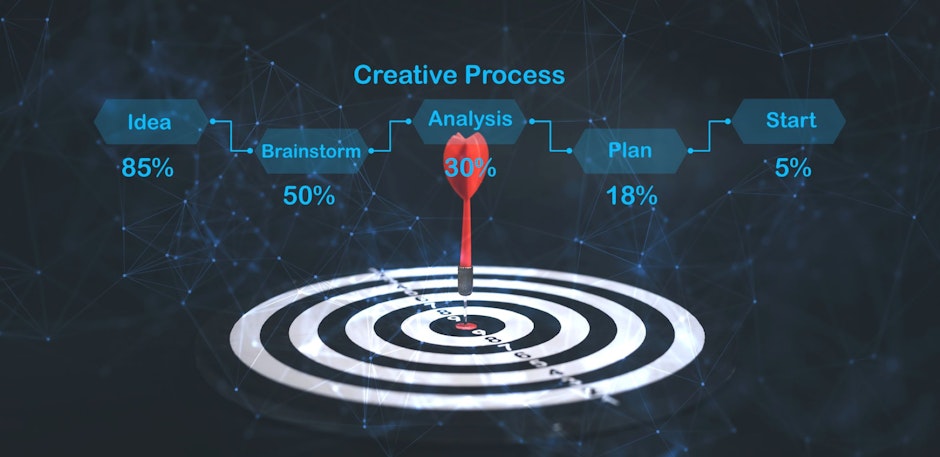
To achieve balance, organisations need structured processes that encourage both discipline and flexibility.
Define clear objectives
Every campaign should begin with a clear understanding of what it is trying to achieve. This provides direction for both creative and strategic decisions.
Encourage structured creativity
Creative exploration should happen within defined parameters. This ensures ideas remain relevant while still allowing innovation.
Use frameworks to guide decision-making
Structured approaches help maintain consistency while allowing room for experimentation. They ensure that ideas are evaluated against clear criteria rather than subjective preference.
Foster collaboration between teams
Creative and strategic teams should work together throughout the process rather than in isolation. This improves alignment and reduces friction.
The Role of Consistency in Balancing Creativity and Strategy
Consistency is the point where creativity and strategy meet. It ensures that all outputs feel connected while still allowing variation in execution.
Consistent branding helps build recognition, while consistent messaging reinforces clarity. At the same time, creative variation keeps content engaging and prevents repetition from becoming predictable.
Achieving this balance requires clear guidelines that define what should remain constant and where flexibility is allowed.
Applying Balance in Physical Marketing Environments
The balance between creativity and strategy is particularly important in physical marketing environments such as exhibitions, retail spaces, and events.
These environments require immediate impact, but also clear messaging. Visitors make decisions quickly, meaning both visual appeal and clarity must work together.
Strategically placed design elements help guide attention, while creative execution ensures that displays stand out in crowded spaces.
For example, well-designed layouts supported by strategic marketing frameworks can help ensure that messaging is both visually engaging and strategically aligned with broader campaign goals.
Measuring Success When Creativity Meets Strategy
Evaluating the effectiveness of balanced marketing requires looking at both qualitative and quantitative outcomes.
Key indicators include:
Engagement levels across campaigns
Conversion rates and lead quality
Brand recall and recognition
Audience feedback and sentiment
Consistency across channels
Strong performance in these areas suggests that creativity and strategy are working together effectively.
Evolving Balance Over Time
The balance between creativity and strategy is not static. It evolves as markets, audiences, and technologies change.
What works in one campaign may not work in the next. This means organisations must remain flexible, continuously refining their approach based on performance data and audience feedback.
Regular review cycles help ensure that both creative and strategic elements remain aligned with current goals.
Finding the Right Balance for Impact
Balancing creativity and strategy is essential for effective marketing. Creativity ensures that messages are engaging and memorable, while strategy ensures they are purposeful and aligned with business objectives.
When both elements are integrated effectively, marketing becomes more powerful, consistent, and impactful.
Ultimately, the most effective marketing is neither purely creative nor purely strategic. It is the result of both working together in balance, each strengthening the other to create meaningful and lasting impact.
posted in Marketing Advice
Published: | Updated:


Written By:
Noelle Kasparis
Noelle Kasparis is the eCommerce Manager at Display Wizard, a Preston based exhibition stand provider.
With over 15 years of experience in online sales, product management, and brand development, she plays a key role in expanding Display Wizard’s digital presence. Noelle is committed to ensuring the company’s products uphold the high standards of quality that customers expect while driving growth across all online channels.
Share this Event