 Trustpilot - Rated Excellent
 In-house Design & Print
 Express Production Options
 Instant Credit for Businesses
  Newsletter
Trade shows remain one of the most effective ways for businesses to generate leads, build brand awareness, and connect directly with potential customers. However, they also require a significant investment of time, budget, and resources. Without a clear strategy in place, it is easy for costs to outweigh returns.
Maximising return on investment (ROI) from trade show participation is not simply about having a visually appealing stand. It involves careful planning, clear objectives, strong execution, and structured follow-up. Every stage of the process contributes to whether an event delivers meaningful results or becomes an expensive missed opportunity.
To achieve consistent success, businesses need to approach trade shows strategically rather than tactically. This includes everything from pre-event planning to post-event analysis, ensuring that every decision supports measurable outcomes. Here’s how you can prepare for, and wrap up, your event to ensure maximum ROI.
Why Trade Show ROI Matters
Trade shows can be one of the most resource-intensive marketing activities. Costs typically include stand space, design and build, travel, staffing, promotional materials, and follow-up activities.
Because of this investment, it is essential to measure whether the event delivers value. ROI is not just about immediate sales; it also includes lead generation, brand exposure, relationship building, and long-term pipeline growth.
Without clear ROI tracking, it becomes difficult to determine which events are worth attending in the future and how to improve performance over time.
Setting Clear Objectives Before the Event
One of the most important steps in maximising ROI is setting measurable trade show goals before the event takes place. Without defined goals, it is impossible to measure success accurately.
Objectives might include:
Generating a specific number of qualified leads
Securing meetings with key prospects
Launching a new product or service
Increasing brand awareness within a target sector
Strengthening relationships with existing clients
Each objective should be specific, measurable, and time-bound. This ensures that performance can be evaluated effectively after the event.
Targeting the Right Audience
Trade show success depends heavily on reaching the right audience. Even the most impressive stand will not deliver ROI if it attracts visitors outside your target market.
Before the event, it is important to research attendee profiles, exhibitor lists, and event themes. This helps ensure that participation aligns with your ideal customer base.
Targeting the right audience also influences how messaging and design are developed. Materials should speak directly to the needs, challenges, and interests of the people most likely to convert.
Designing an Engaging Stand Experience
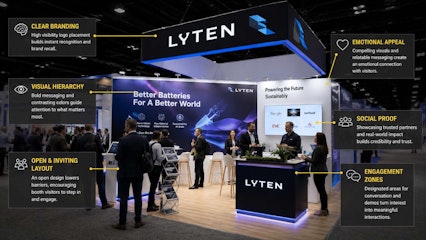
A well-designed stand is essential for attracting attention and encouraging engagement. In busy exhibition environments, first impressions are formed quickly, and visual impact plays a major role in whether visitors choose to stop.
Clear messaging, strong branding, and effective layout all contribute to stand performance. The goal is to communicate value instantly and encourage meaningful interaction.
Lighting can also play a significant role in visibility and engagement. Using LED-lit displays for trade shows and showrooms helps to create a focal point within a busy exhibition hall, drawing attention and improving overall stand presence.
Training Your Team for Engagement
Even the best-designed stand will underperform without an engaged and well-prepared team. Staff play a critical role in converting interest into leads and building relationships with visitors.
Effective trade show teams should:
Understand key messaging and objectives
Be proactive in engaging with attendees
Ask qualifying questions to identify strong leads
Record information accurately for follow-up
Team members should also be briefed on how to approach different types of visitors and how to adapt conversations based on interest level.
Strong interpersonal engagement often has a greater impact on ROI than any physical display element.
Capturing and Managing Leads Effectively
Lead capture is one of the most important aspects of trade show ROI. Without a structured system for collecting and organising data, valuable opportunities can be lost.
Effective lead management involves:
Using digital tools or CRM systems for data capture
Recording key details consistently
Tagging leads based on priority or interest level
Ensuring immediate post-event follow-up
Speed is particularly important. The sooner a lead is followed up after the event, the higher the likelihood of conversion.
Organised lead management also supports better long-term analysis of trade show performance.
Driving Engagement During the Event



Engagement is what transforms passive visitors into active prospects. The more interaction a stand generates, the higher the potential ROI.
Engagement strategies may include:
Live demonstrations
Interactive product displays
Competitions or giveaways
Informational presentations
The key is to create reasons for visitors to stop, stay, and start conversations.
Engagement should always be aligned with overall objectives, ensuring that interactions contribute to meaningful outcomes rather than just footfall.
Measuring Performance Against Objectives
After the event, it is essential to evaluate performance against the objectives set before participation.
Key metrics include:
Number of leads generated
Lead quality and conversion potential
Meetings booked during or after the event
Sales pipeline influenced by the event
Overall cost per lead or acquisition
This evaluation helps determine whether the event delivered a positive return and provides insight into areas for improvement.
Without measurement, it is impossible to refine strategy or improve future performance.
Following Up After the Event
Post-event follow-up is one of the most overlooked aspects of trade show ROI. Even strong leads can lose momentum if they are not contacted promptly.
Effective follow-up should be:
Timely (within days of the event)
Personalised based on interaction level
Structured with clear next steps
Consistent across all leads
Following up quickly helps maintain engagement and increases the likelihood of conversion.
It is also important to segment leads based on priority, ensuring that high-value prospects receive appropriate attention.
Learning and Improving for Future Events
Each trade show provides valuable insights that can be used to improve future performance. Analysing what worked and what did not helps refine strategy over time.
Areas to review include:
Stand design effectiveness
Messaging clarity and engagement
Lead quality and conversion rates
Team performance
Audience alignment
Continuous improvement ensures that each event delivers better results than the last.
Common Mistakes That Reduce Trade Show ROI
Several common mistakes can significantly reduce return on investment.
These include:
Attending events without clear objectives
Poor stand design that fails to attract attention
Lack of staff training or engagement
Inadequate lead capture systems
Delayed or inconsistent follow-up
Avoiding these issues is essential for achieving strong performance and consistent returns.
Maximising Long-Term Value from Trade Shows
Trade show ROI should not be measured only in immediate outcomes. Long-term value is equally important.
Events can contribute to:
Brand awareness growth
Strengthened customer relationships
Increased pipeline opportunities
Industry positioning and credibility
By viewing trade shows as part of a wider marketing strategy, businesses can extract greater value over time.
Turning Trade Shows into High-Value Investments
Maximising ROI from trade show participation requires more than simply attending an event. It demands careful planning, clear objectives, strong execution, and structured follow-up.
From stand design and engagement strategies to lead management and post-event follow-up, each stage plays a critical role in determining success.
Trade shows are most effective when approached strategically. With the right preparation and analysis, they can deliver significant long-term value and become a reliable driver of business growth.
posted in Marketing Advice
Published: | Updated:


Written By:
Peter Symonds
Peter Symonds is Managing Director at Display Wizard, a Preston based display and exhibition stand provider.
He has over 15 years of experience in the large format print and exhibition industry and has helped grow Display Wizard into one of the UK's leading provider of high-quality display solutions.
Share this Event