 Trustpilot - Rated Excellent
 In-house Design & Print
 Express Production Options
 Instant Credit for Businesses
  Newsletter
Marketing collateral plays a crucial role in how brands communicate with their audiences. It includes all the tangible and digital materials used to inform, persuade, and engage potential customers - ranging from brochures and flyers to digital assets, presentations, and exhibition materials.
However, simply producing marketing collateral is no longer enough. In today’s competitive landscape, audiences are constantly exposed to messaging from multiple brands at once. This means collateral must do more than exist; it must actively capture attention, communicate value quickly, and encourage engagement.
Optimising marketing collateral is about ensuring every piece serves a clear purpose, aligns with broader messaging, and is designed with the audience in mind. When done effectively, it improves brand consistency, strengthens recognition, and increases conversion potential across multiple channels.
Understanding effective marketing collateral strategies is essential for achieving this, as it provides a structured approach to creating materials that are not only visually appealing but also strategically impactful.
What Is Marketing Collateral?
Marketing collateral refers to any material used to support marketing and sales efforts. It is designed to inform, persuade, or reinforce brand messaging at different stages of the customer journey.
This can include:
Printed brochures and flyers
Digital presentations and PDFs
Product sheets and case studies
Email templates and campaigns
Exhibition and event materials
Social media graphics and assets
Each type of collateral serves a different function, but all should contribute to a unified brand message.
The effectiveness of marketing collateral depends not just on its content, but on how well it is designed, structured, and aligned with audience expectations.
Why Optimisation Matters
Optimising marketing collateral ensures that every asset delivers maximum impact. Without optimisation, even well-designed materials can fail to engage or convert.
There are several reasons why optimisation is essential:
1. Attention is limited
Audiences make quick decisions about whether to engage with content. Collateral must communicate value immediately.
2. Competition is high
Brands are competing for visibility across both digital and physical environments. Strong collateral helps differentiate messaging.
3. Consistency builds trust
When collateral is aligned across channels, it strengthens brand recognition and credibility.
4. Engagement drives conversion
Well-optimised materials encourage action, whether that is visiting a website, making an enquiry, or attending an event.
Optimisation ensures that collateral is not just visually appealing but also strategically effective.
Start with a Clear Objective
Every piece of marketing collateral should begin with a clearly defined objective. Without this, design and messaging decisions can become unfocused.
Ask:
What is the purpose of this asset?
What action should the audience take?
What is the single most important message?
A clear objective ensures that every element within the collateral supports a specific outcome.
For example, a brochure designed to generate leads should focus on clarity and calls to action, while a product sheet may prioritise detail and specification.
Understand Your Audience
Effective collateral is always audience-focused. Understanding who you are speaking to helps determine tone, design style, and messaging approach.
Different audiences respond to different types of communication. A technical audience may prefer detailed specifications, while a general consumer audience may respond better to simplified messaging and visual storytelling.
Audience research should consider:
Demographics
Industry or sector
Pain points and motivations
Level of product knowledge
The more aligned the collateral is with audience needs, the more effective it becomes.
Simplify Messaging for Clarity
One of the most common issues with marketing collateral is overloading it with too much information. While it may feel important to include every detail, this often reduces clarity and engagement.
Simplified messaging improves comprehension and ensures key points are not lost.
Effective collateral should:
Focus on one primary message per asset
Use concise and clear language
Avoid unnecessary jargon or complexity
When messaging is clear, audiences are more likely to understand and act on it.
Use Strong Visual Hierarchy
Visual hierarchy is essential for guiding how information is processed. It determines what the viewer sees first, second, and third.
Well-structured hierarchy ensures that:
Headlines stand out immediately
Supporting information is easy to follow
Calls to action are clearly visible
Without hierarchy, all elements compete equally for attention, which reduces overall effectiveness.
Good design uses size, spacing, colour, and positioning to create a natural flow through the content.
Maintain Brand Consistency



Consistency across marketing collateral helps reinforce brand identity and build trust. When materials look and feel different across channels, it can create confusion and weaken recognition.
Consistency should apply to:
Colour palettes
Typography
Tone of voice
Layout structure
Visual style
A consistent approach ensures that all materials feel connected, regardless of format or channel.
Optimising Collateral for Different Environments
Marketing collateral is used in a wide range of environments, and optimisation should take context into account.
Digital collateral should be designed for screens, with clear readability and responsive layouts. Print materials need to consider physical dimensions, paper quality, and viewing distance.
In physical environments such as exhibitions or retail spaces, collateral must be highly visible and easy to understand at a glance.
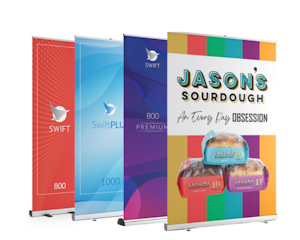
Banner stand options available here can significantly improve visibility and engagement in event settings, ensuring messaging is clearly communicated even in busy environments.
Incorporate Strong Calls to Action
Every piece of marketing collateral should guide the audience toward a next step. Without a clear call to action, engagement often ends with passive consumption.
Effective calls to action should be:
Clear and direct
Easy to understand
Visually prominent
Aligned with the overall objective
Examples include encouraging users to visit a website, request more information, or speak to a representative.
The more specific the action, the more effective the response tends to be.
Design for Readability and Accessibility
Readability is one of the most important factors in collateral performance. If content is difficult to read, it will not be engaged with.
Key considerations include:
Font size and style
Contrast between text and background
Spacing between elements
Layout simplicity
Accessibility is equally important. Collateral should be designed so that it can be easily understood by a wide audience, including those with visual or cognitive challenges.
Test and Refine Your Materials
Optimisation is an ongoing process rather than a one-time task. Testing different versions of marketing collateral can provide valuable insight into what works best.
This may include:
A/B testing digital assets
Gathering feedback from sales teams
Analysing engagement metrics
Observing performance in real-world environments
Continuous refinement ensures that collateral remains effective over time.
Common Mistakes to Avoid
Even well-intentioned marketing collateral can fail if key principles are ignored.
Common mistakes include:
Overloading content with too much information
Inconsistent branding across materials
Weak or unclear calls to action
Poor visual hierarchy
Ignoring audience needs
Avoiding these issues significantly improves engagement and effectiveness.
Creating Collateral That Delivers Results
Optimising marketing collateral is essential for ensuring that every asset contributes meaningfully to engagement and conversion goals. In a competitive marketing environment, clarity, consistency, and purpose are key to standing out.
Ultimately, successful marketing collateral is not just about design or content alone, but about how well both work together to create meaningful engagement that drives action.
posted in Marketing Advice
Published: | Updated:


Written By:
Peter Symonds
Peter Symonds is Managing Director at Display Wizard, a Preston based display and exhibition stand provider.
He has over 15 years of experience in the large format print and exhibition industry and has helped grow Display Wizard into one of the UK's leading provider of high-quality display solutions.
Share this Event