 Trustpilot - Rated Excellent
 In-house Design & Print
 Express Production Options
 Instant Credit for Businesses
  Newsletter
In a world saturated with advertising, designing marketing materials that genuinely stand out has become more challenging than ever. Audiences are constantly exposed to digital ads, printed materials, signage, and branded content, often all within the same moment. As a result, attention is scarce and highly selective.
Good design is no longer just about aesthetics. It plays a direct role in whether a message is noticed, understood, and remembered. Marketing materials must work harder than ever to capture attention quickly and communicate value clearly.
Whether it’s a printed leaflet, a digital banner, or an exhibition display, the same principles apply: clarity, hierarchy, and visual impact determine effectiveness. This is where understanding the role of design in marketing engagement becomes essential, as it highlights how visual structure directly influences audience behaviour.
Why Design Matters More Than Ever
Design is often the first point of contact between a brand and its audience. Before a message is read or understood, it is visually assessed in a matter of seconds.
This means that design is responsible for forming the first impression. If the design fails to attract attention or communicate relevance quickly, the opportunity for engagement is lost.
Modern audiences are also highly accustomed to professional-grade visuals. Poorly designed materials stand out for the wrong reasons, often reducing trust and perceived credibility.
Effective design, on the other hand, creates instant clarity. It helps guide the viewer’s attention, simplify complex messages, and encourage further interaction.
Start with a Clear Purpose
Every piece of marketing material should begin with a clearly defined objective. Without a purpose, design becomes directionless.
Ask:
What action do you want the audience to take?
What is the single most important message?
What should the viewer remember after seeing this?
Clarity of purpose ensures that every design decision supports a specific outcome rather than adding unnecessary complexity.
This focus is particularly important in environments where attention is limited, such as events or retail spaces, where messaging must be understood almost instantly.
Use Visual Hierarchy to Guide Attention
One of the most important principles in effective design is visual hierarchy. It determines how information is structured and how the viewer’s eye moves across a piece of content.
Strong hierarchy ensures that the most important information is seen first, followed by supporting details and then secondary information.
This can be achieved through:
Size differences in typography
Strategic use of contrast
Positioning of key elements
Spacing and layout balance
Without hierarchy, all elements compete equally for attention, which leads to confusion and reduces message clarity.
Designers who understand hierarchy are able to control how audiences interpret information, making communication far more effective.
Keep Messaging Simple and Focused
One of the most common mistakes in marketing design is including too much information. While it may feel important to communicate everything, overloading a design reduces its impact.
Simplicity improves comprehension. When messaging is focused on a single idea or a small number of key points, audiences are more likely to engage and remember it.
This principle applies across all formats, from digital ads to printed materials and physical displays. The more concise the message, the stronger its impact.
Simplicity does not mean lack of detail, but rather prioritising what matters most.
Choose the Right Colours and Contrast
Colour plays a powerful role in attracting attention and influencing emotion. Different colours can evoke different responses, from urgency to trust or excitement.
However, colour is not just about emotion; it is also about functionality. High contrast between text and background improves readability, especially in fast-paced environments.
Poor contrast can cause important information to be missed entirely, particularly from a distance or under varying lighting conditions.
A well-considered colour palette helps reinforce brand identity while ensuring that messaging remains clear and accessible.
Typography: Making Your Message Readable
Typography is one of the most critical elements of design, yet it is often overlooked. The choice of font, size, spacing, and weight all influence how easily a message can be read and understood.
Good typography ensures that:
Headlines are instantly readable
Supporting text remains clear at different distances
The overall layout feels balanced and structured
In marketing materials, readability should always take priority over decorative font choices. If a message cannot be read quickly, it cannot be effective.
Design for the Environment



Effective marketing design must consider where and how it will be seen. A design that works well on a screen may not translate effectively to print or physical spaces.
For example, materials displayed at trade shows need to be readable from a distance and within busy environments. This requires larger typography, simplified messaging, and strong visual contrast.
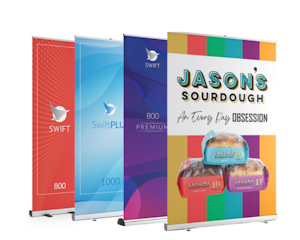
Portable exhibition banner displays are ideal because they allow brands to present clear, high-impact messaging in a structured and visible format.
Understanding the environment ensures that design choices are practical as well as visually appealing.
Use Imagery That Supports the Message
Imagery should enhance communication, not distract from it. Every visual element should have a clear purpose and support the overall message.
Strong imagery can:
Reinforce key messages
Create emotional connection
Improve recall and recognition
However, overly complex or irrelevant visuals can reduce clarity and dilute impact.
Consistency in imagery style also helps reinforce brand identity, making materials more cohesive across different channels.
Create Consistency Across All Materials
Consistency is essential for building recognition and trust. When marketing materials look and feel different across platforms, it can confuse audiences and weaken brand perception.
Consistency should apply to:
Colour schemes
Typography
Layout structure
Tone of messaging
Visual style
When all materials follow a unified approach, audiences are more likely to recognise and remember the brand.
Common Design Mistakes to Avoid
Even well-intentioned designs can fail if key principles are overlooked.
Some common mistakes include:
Overcrowding with too much information
Weak contrast between text and background
Inconsistent branding elements
Lack of clear hierarchy
Using overly complex visuals that distract from messaging
Avoiding these pitfalls significantly improves the effectiveness of marketing materials.
Testing and Refining Your Designs
Design should not be considered final at the first version. Testing is an important part of ensuring effectiveness.
This can include:
Gathering feedback from colleagues or customers
Testing readability at different distances
Reviewing performance in real-world environments
Making iterative improvements based on results
Small adjustments can often make a significant difference in clarity and engagement.
Designing for Attention and Clarity
Design is one of the most important factors in determining whether marketing materials succeed or fail. In environments where attention is limited, clarity and visual impact are essential.
With principles such as hierarchy, simplicity, contrast, and consistency, brands can create materials that not only attract attention but also communicate messages effectively.
Ultimately, effective design is not about complexity or decoration, but communication. When design is used intentionally, marketing materials become more engaging, more memorable, and significantly more effective.
posted in Buyer's Guides
Published: | Updated:


Written By:
Noelle Kasparis
Noelle Kasparis is the eCommerce Manager at Display Wizard, a Preston based exhibition stand provider.
With over 15 years of experience in online sales, product management, and brand development, she plays a key role in expanding Display Wizard’s digital presence. Noelle is committed to ensuring the company’s products uphold the high standards of quality that customers expect while driving growth across all online channels.
Share this Event