 Trustpilot - Rated Excellent
 In-house Design & Print
 Express Production Options
 Instant Credit for Businesses
  Newsletter
Retail signage has one of the toughest jobs in marketing. It needs to attract attention, communicate a message, influence behaviour, and often encourage action - all within a matter of seconds. Yet despite the significant investment many businesses make in signage, much of it goes unnoticed.
This isn't because customers actively choose to ignore signs. In reality, consumers are exposed to such a high volume of visual information every day that they have become exceptionally skilled at filtering out anything that doesn't immediately appear relevant or valuable.
Understanding why signage gets overlooked is the first step towards creating displays that genuinely capture attention. While factors such as location and design matter, successful signage ultimately comes down to understanding how people process information in busy environments.
Below are eight of the most common reasons customers ignore retail signage and what businesses can do to overcome them.
1. There Is Too Much Information
One of the biggest mistakes businesses make is trying to communicate everything at once.
A sign that contains multiple messages, lengthy paragraphs, excessive product details, and numerous calls to action quickly becomes overwhelming. Instead of attracting attention, it creates confusion.
Customers rarely stop to read large amounts of text. Most are scanning their surroundings and making rapid decisions about what deserves their attention.
Effective signage focuses on a single primary message. Supporting information can be included where appropriate, but the main takeaway should be immediately obvious.
The simpler the message, the greater the likelihood that it will be noticed and remembered.
2. The Design Lacks Visual Hierarchy
Even when messaging is concise, poor organisation can make signage difficult to process.
When headlines, images, logos, and supporting text all compete equally for attention, viewers struggle to determine where to look first. As a result, many simply move on.
This is why understanding visual hierarchy principles in signage design is so important. Strategic use of size, contrast, spacing, and positioning helps guide the viewer's eye through information in a logical order.
Strong hierarchy allows customers to absorb key messages quickly without feeling overwhelmed.
Without it, even well-written content can go unread.
3. The Sign Doesn't Stand Out from Its Surroundings
Retail environments are visually crowded spaces. Customers are surrounded by product packaging, promotional displays, digital screens, directional signs, and competing branding.
If a sign blends into its surroundings, it effectively becomes invisible.
This often happens when businesses rely on colours, fonts, or layouts that are too similar to everything around them.
Creating contrast is essential. This does not necessarily mean using bright colours or flashy graphics; it means ensuring the sign is visually distinct enough to attract attention naturally.
Successful signage creates a focal point that draws the eye without appearing cluttered or disruptive.
4. The Message Isn't Relevant to the Audience
People instinctively ignore information they don't believe applies to them.
A sign may be professionally designed and perfectly positioned, but if the message does not address a customer's interests, needs, or current situation, it will likely be overlooked.
The most effective signage focuses on customer benefits rather than business features.
For example, a message explaining how a product solves a problem is generally more engaging than one that simply lists technical specifications.
Relevance increases the likelihood that customers will stop, read, and engage with the content being presented.
5. Poor Placement Limits Visibility
Even excellent signage can fail if it is placed in the wrong location.
Many businesses focus heavily on design while giving insufficient attention to positioning. Signs that are obscured by shelving, located outside natural sightlines, or positioned too high or low often go unnoticed.
Effective placement takes customer movement into account. Signage should be visible from key approach angles and positioned where people naturally look.
Retailers should regularly observe customer behaviour within their spaces to identify areas of high visibility and engagement.
A well-positioned sign often outperforms a more expensive sign placed in the wrong location.
6. Customers Are Experiencing Information Overload



Modern consumers are exposed to thousands of marketing messages every day. As a result, they have developed what is often referred to as "banner blindness" - the tendency to subconsciously ignore promotional content.
This phenomenon is not limited to online advertising. It affects physical signage as well.
When customers enter an environment filled with competing messages, they automatically filter out much of what they see.
Businesses can combat this by focusing on clarity and restraint rather than simply increasing the volume of messaging.
A single compelling message often achieves more than multiple competing promotions displayed simultaneously.
7. The Sign Lacks Visual Appeal
First impressions matter enormously in retail environments.
Customers often make immediate judgements about whether something deserves their attention based purely on visual appearance. Signs that look outdated, poorly designed, or low quality can be ignored before the message is even considered.
Elements that influence visual appeal include:
Image quality
Typography
Colour choices
Material quality
Overall layout balance
Professional design does not require complexity. In many cases, clean and well-executed visuals are significantly more effective than overly elaborate designs.
Investing in quality design helps communicate credibility and professionalism before a single word is read.
8. There Is No Clear Reason to Act
Even when signage successfully attracts attention, many displays fail because they do not provide a clear next step.
Customers may understand the message but remain uncertain about what action they should take.
Effective signage should answer three questions quickly:
What is this?
Why does it matter to me?
What should I do next?
Calls to action do not need to be aggressive. Simple prompts such as learning more, speaking to staff, exploring a product range, or taking advantage of an offer can significantly improve engagement.
Without direction, attention often ends without producing meaningful results.
How Consumer Behaviour Influences Signage Performance
Understanding customer psychology is critical when designing retail signage.
People rarely evaluate every message they encounter. Instead, they make rapid subconscious decisions about what deserves attention.
Factors influencing these decisions include:
Perceived relevance
Visual contrast
Cognitive effort required
Emotional appeal
Environmental distractions
The best signage works with these behavioural tendencies rather than against them.
Instead of forcing customers to work harder, effective displays make information easy to process and immediately valuable.
The Role of Simplicity in Effective Signage
One common characteristic shared by high-performing signage is simplicity.
Simplicity improves:
Readability
Message retention
Visual impact
Decision-making speed
Businesses sometimes assume that adding more information increases effectiveness. In reality, the opposite is often true.
Removing unnecessary elements creates greater focus and allows the most important message to stand out.
When customers can understand a sign within seconds, engagement rates typically improve.
Applying These Lessons Beyond Retail Spaces
The principles that influence retail signage effectiveness apply equally to exhibitions, events, and promotional displays.
Whether customers are walking through a shopping centre or an exhibition hall, they are making the same rapid decisions about where to direct their attention.
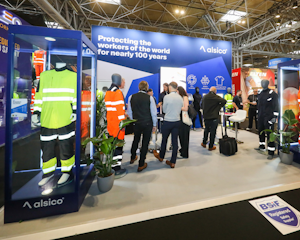
This is why businesses exhibiting at trade shows often rely on portable display solutions for trade shows and events, which are designed to communicate key messages clearly while maintaining strong visual impact in busy environments.
The underlying challenge remains the same: earning attention in a crowded visual landscape.
Evaluating Your Existing Signage
Businesses looking to improve signage performance should periodically review their existing displays.
Questions worth asking include:
Is the main message immediately obvious?
Does the sign stand out from its surroundings?
Is the content relevant to the target audience?
Is there a clear call to action?
Could any information be removed without affecting understanding?
Small adjustments can often produce significant improvements in engagement and visibility.
Regular evaluation helps ensure signage continues to perform effectively as customer expectations and environments evolve.
Creating Signage That Earns Attention
Most retail signage is ignored for a simple reason: customers are constantly filtering information and only paying attention to what appears immediately relevant, clear, and valuable.
Signs that are cluttered, poorly positioned, visually weak, or difficult to process struggle to compete for attention. Meanwhile, signage that prioritises clarity, simplicity, strong design, and customer relevance has a much greater chance of influencing behaviour.
If businesses can understand the reasons customers overlook displays, they can make smarter design and placement decisions that improve visibility and engagement.
Ultimately, effective signage is not about shouting louder than everything else in the environment. It is about communicating the right message in the right way, at the right moment, making it easy for customers to stop, engage, and take action.
posted in Buyer's Guides
Published: | Updated:


Written By:
Peter Symonds
Peter Symonds is Managing Director at Display Wizard, a Preston based display and exhibition stand provider.
He has over 15 years of experience in the large format print and exhibition industry and has helped grow Display Wizard into one of the UK's leading provider of high-quality display solutions.
Share this Event