 Trustpilot - Rated Excellent
 In-house Design & Print
 Express Production Options
 Instant Credit for Businesses
  Newsletter
Walk through any busy trade show and you'll notice something interesting. Some exhibition stands are constantly filled with visitors, while others receive little more than passing glances. In many cases, the businesses exhibiting offer products of similar quality, operate in the same industry, and have comparable marketing budgets. So why do some booths consistently outperform others?
The answer often lies in psychology.
Every element of a trade show booth influences how visitors think, feel, and behave. From the layout and lighting to colour choices, messaging, and even the positioning of staff, subtle psychological cues shape whether someone stops, engages, and ultimately becomes a lead or customer.
Successful exhibitors understand that effective booth design isn't simply about looking attractive. It is about creating an environment that feels welcoming, communicates trust, and makes interaction feel effortless.
By understanding the psychological principles behind visitor behaviour, businesses can design exhibition spaces that generate stronger engagement, more meaningful conversations, and higher conversion rates.
First Impressions Are Formed Almost Instantly
Research into human behaviour consistently shows that people form impressions within seconds of encountering something new.
Trade shows amplify this effect.
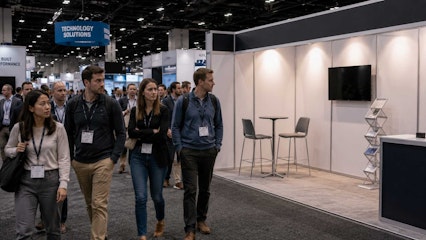
Visitors move through exhibition halls at a steady pace, processing hundreds of visual stimuli throughout the day. They rarely have the time (or the mental energy) to carefully evaluate every stand they pass.
Instead, they rely on quick judgements.
Within moments, visitors begin asking themselves questions such as:
Does this company look professional?
Is it relevant to me?
Does the stand feel approachable?
Is it worth stopping here?
These decisions happen largely subconsciously.
A clean, organised, visually confident booth immediately creates a stronger impression than one that appears cluttered or confusing.
Cognitive Load Influences Visitor Decisions
Every exhibition attendee experiences information overload.
With countless brands competing for attention, the brain naturally looks for ways to conserve mental energy.
Psychologists refer to this as cognitive load.
The more effort required to understand a display, the more likely visitors are to move on.
High-converting booths reduce cognitive load by presenting information clearly and logically.
This includes:
Simple headlines
Limited text
Strong visual hierarchy
Clear branding
Obvious calls to action
Rather than trying to communicate everything at once, successful exhibitors focus on one or two key messages that visitors can understand almost immediately.
Clarity almost always outperforms complexity.
Open Spaces Feel More Inviting
People naturally avoid environments that appear crowded or difficult to enter.
Trade show booths are no exception.
A stand with tables blocking the entrance, furniture positioned awkwardly, or promotional materials creating physical barriers may unintentionally discourage visitors from stepping inside.
Open layouts communicate accessibility.
Wide entrances, uncluttered walkways, and visible meeting areas reduce psychological friction by making visitors feel welcome rather than committed.
The easier it feels to enter a booth, the more likely people are to do so.
Colour Shapes Emotional Responses
Colour psychology plays an important role in exhibition design.
Different colours can influence how visitors perceive a brand before any conversation begins.
For example:
Blue often communicates trust and professionalism.
Green is commonly associated with sustainability and growth.
Red creates urgency and attracts attention.
Orange conveys enthusiasm and energy.
Black can suggest sophistication and luxury.
However, colour should always support the wider brand identity.
Choosing colours simply because they are visually striking may create inconsistency if they conflict with existing branding.
The objective is to reinforce recognition while guiding attention naturally throughout the display.
Lighting Directs Attention
Lighting does far more than illuminate a stand.
It controls where visitors look.
Brightly lit products naturally attract attention, while poorly illuminated displays can appear less inviting regardless of their quality.
Strategic lighting can:
Highlight key products.
Create depth.
Improve readability.
Increase visual contrast.
Establish atmosphere.
Well-planned lighting also helps distinguish a booth from surrounding exhibitors, particularly in large exhibition halls where numerous displays compete for attention simultaneously.
The Importance of Visual Hierarchy
Visitors rarely consume information in a perfectly organised sequence.
Instead, their eyes naturally move towards the largest, brightest, or highest-contrast elements first.
Effective booth design uses visual hierarchy to control this journey.
Typically, visitors should notice:
The company name.
A clear headline.
Supporting visuals.
Product displays.
Calls to action.
This logical flow allows visitors to understand the business within seconds.
When every graphic competes equally for attention, nothing truly stands out.
Strong hierarchy helps visitors process information without feeling overwhelmed.
Social Proof Encourages Engagement


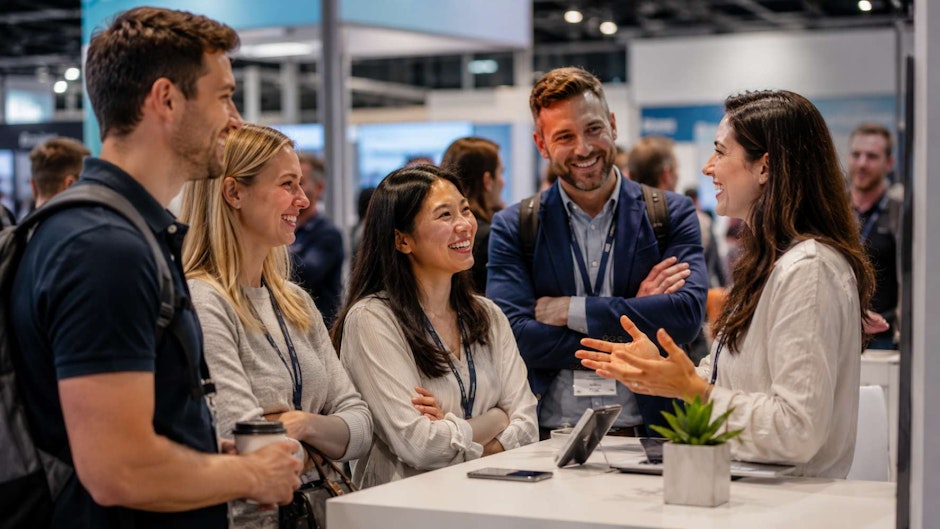
People naturally look to others when deciding how to behave.
This psychological principle, known as social proof, has significant implications for exhibition design.
Busy booths attract additional visitors.
Seeing other attendees engaging with a stand signals that something valuable is happening.
Businesses can reinforce social proof by displaying:
Customer testimonials
Awards
Industry accreditations
Case studies
Client logos
Live demonstrations
Even conversations taking place within the stand can encourage passers-by to stop and investigate.
People often assume that popular booths are worth exploring.
Interactive Experiences Increase Memory
Passive displays are easy to overlook.
Interactive experiences encourage visitors to become active participants rather than passive observers.
Examples include:
Product demonstrations
Digital touchscreens
Live presentations
Competitions
Hands-on testing
Interactive displays
Participation increases both attention and memory.
When visitors physically engage with products or experiences, they create stronger emotional connections that are more likely to be remembered after the event.
The objective should always be meaningful interaction rather than novelty for its own sake.
Booth Staff Influence Psychological Comfort
Even the best-designed exhibition stand depends on the people working within it.
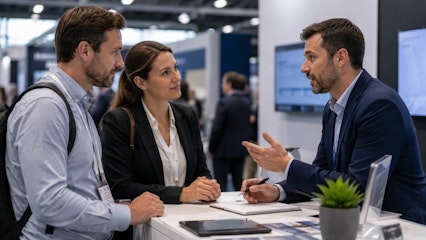
Visitors continuously assess body language and social cues.
Approachable staff create psychological safety.
This includes:
Smiling naturally
Maintaining open posture
Making appropriate eye contact
Greeting visitors without pressure
Allowing space for browsing
Aggressive sales approaches often trigger avoidance.
Conversely, friendly conversations encourage longer dwell times and more productive discussions.
Staff behaviour should complement the physical design of the stand by reinforcing feelings of welcome and professionalism.
Layout Influences Movement
How visitors move through an exhibition space directly affects engagement.
Thoughtful design encourages natural movement while reducing unnecessary obstacles.
Understanding how booth layouts influence visitor behaviour allows exhibitors to position products, demonstrations, meeting spaces, and promotional materials where they are most likely to capture attention without disrupting visitor flow.
Simple adjustments, such as placing key displays along natural walking routes or avoiding bottlenecks near entrances, can significantly increase the number of meaningful interactions throughout the day.
Movement should feel intuitive rather than forced.
Reducing Decision Fatigue
Trade show visitors make hundreds of decisions during a single event.
As the day progresses, decision fatigue begins to affect behaviour.
Complex displays requiring significant thought become increasingly difficult to engage with.
High-converting booths simplify choices.
Rather than presenting dozens of products simultaneously, they guide visitors towards one clear next step.
This might involve:
Booking a consultation.
Watching a demonstration.
Collecting a brochure.
Scanning a QR code.
Speaking with a member of staff.
Reducing unnecessary choices helps visitors progress naturally through the engagement process.
Multi-Sensory Experiences Create Stronger Impressions
The most memorable exhibition stands often engage multiple senses.
Visual branding remains important, but additional sensory elements can strengthen emotional connections.
These may include:
Carefully selected music
Product textures
Live demonstrations
Refreshments
Pleasant scents where appropriate
When used thoughtfully, multi-sensory experiences increase the likelihood that visitors will remember both the stand and the brand after leaving the exhibition.
The key is subtlety.
Sensory elements should enhance the experience rather than distract from it.
Consistency Builds Trust
Visitors notice inconsistencies surprisingly quickly.
If booth graphics differ from website branding, printed materials use different messaging, or staff communicate conflicting information, confidence may begin to decline.
Consistency reinforces professionalism.
Every element should support the same visual identity and core message.
This includes:
Colours
Typography
Photography
Messaging
Product positioning
Staff communication
Consistency reduces uncertainty and strengthens brand recognition throughout the customer journey.
High-Quality Displays Reflect Brand Quality
Visitors often judge businesses based on the quality of their presentation.
Premium materials, crisp graphics, and professional finishes create positive assumptions about the organisation behind them.
Portable banner stand displays for trade shows provide a practical way to maintain a polished appearance while remaining flexible enough for regular events and changing exhibition spaces.
Well-produced display materials reinforce perceptions of reliability, attention to detail, and professionalism before conversations even begin.
Common Design Mistakes That Reduce Conversions
Even experienced exhibitors can unintentionally create barriers that discourage engagement.
Common mistakes include:
Cluttered Graphics
Too much information overwhelms visitors.
Blocking the Entrance
Physical barriers make booths feel less approachable.
Weak Lighting
Poor visibility reduces impact.
Inconsistent Branding
Mixed messages create confusion.
Passive Staff
Ignoring visitors wastes valuable opportunities.
Unclear Calls to Action
Visitors should always understand what to do next.
Avoiding these issues often delivers greater improvements than simply increasing exhibition budgets.
Designing Booths Around Human Behaviour
The highest-performing trade show booths succeed because they are designed with people in mind rather than simply aesthetics. Every decision - from layout and lighting to messaging, colour, and staff behaviour - influences how visitors perceive a business and whether they choose to engage with it.
By reducing cognitive effort, creating welcoming spaces, reinforcing trust through consistency, and encouraging meaningful interaction, businesses can dramatically improve the effectiveness of their exhibition presence. Small psychological adjustments often produce significant improvements in visitor engagement because they align with the way people naturally process information and make decisions.
Ultimately, successful booth design is about removing barriers rather than adding features. When visitors feel comfortable, understand your message quickly, and enjoy interacting with your brand, conversations become easier, relationships become stronger, and conversions become far more likely. Businesses that combine thoughtful design with genuine customer engagement will always be better positioned to make a lasting impression at trade shows.
posted in Trade Show Guide
Published: | Updated:


Written By:
Peter Symonds
Peter Symonds is Managing Director at Display Wizard, a Preston based display and exhibition stand provider.
He has over 15 years of experience in the large format print and exhibition industry and has helped grow Display Wizard into one of the UK's leading provider of high-quality display solutions.
Share this Event