 Trustpilot - Rated Excellent
 In-house Design & Print
 Express Production Options
 Instant Credit for Businesses
  Newsletter
Effective Communication for Trade Show Success
Trade shows are built around conversations.
No matter how impressive your exhibition stand looks or how innovative your products are, success ultimately depends on the quality of the interactions your team has with visitors. Every greeting, question, demonstration, and follow-up contributes to how potential customers perceive your business.
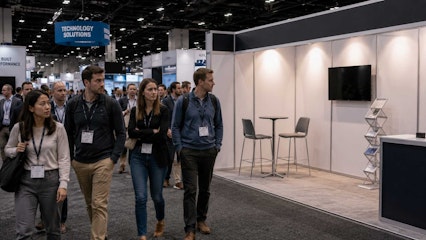
Yet effective communication at trade shows is very different from everyday sales or customer service. Exhibition halls are noisy, fast-paced environments where visitors are constantly distracted and have limited time. Exhibitors often have just a few minutes (or sometimes only a few seconds) to capture attention, build rapport, and determine whether someone is a genuine prospect.
The good news is that strong communication is a skill that can be developed. By understanding how visitors think, asking better questions, listening actively, and presenting information clearly, exhibitors can transform casual conversations into valuable business opportunities.
Here's how to communicate more effectively before, during, and after your next trade show.
Understand Why Visitors Attend Trade Shows
One of the biggest communication mistakes exhibitors make is assuming every visitor is ready to buy.
In reality, people attend exhibitions for a variety of reasons.
Some visitors are actively searching for suppliers, while others are researching future purchases, comparing competitors, exploring industry trends, or simply expanding their professional network.
Recognising these different motivations helps your team adjust conversations accordingly.
Rather than treating every interaction as a sales pitch, approach each visitor with curiosity.
Your objective should be to understand why they stopped in the first place.
Once you understand their goals, you can provide information that feels relevant rather than rehearsed.
Make a Strong First Impression
Trade show conversations begin long before anyone speaks.
Body language, facial expressions, posture, and eye contact all communicate professionalism and approachability.
Visitors are naturally more inclined to approach exhibitors who appear:
Relaxed
Friendly
Engaged
Confident
Available
Simple behaviours can make a significant difference.
Smile genuinely.
Stand near the front of the booth.
Avoid folding your arms.
Keep phones out of sight.
Make eye contact with people passing by without making them feel uncomfortable.
These small actions create an inviting atmosphere that encourages conversation.
Start Conversations Naturally
Many exhibitors rely on scripted opening lines that feel overly sales-focused.
Questions such as:
"Can I help you?"
or
"Are you interested in our products?"
often produce polite but unhelpful responses.
Instead, begin with open, conversational questions that encourage discussion.
Examples include:
"What brings you to the exhibition today?"
"Have you visited this event before?"
"What sort of solutions are you looking for?"
"Is there anything in particular you've been hoping to find?"
These questions invite visitors to share information, giving your team valuable context for the rest of the conversation.
Natural dialogue always feels more comfortable than rehearsed pitches.
Listen More Than You Speak
Strong communicators understand that listening is often more valuable than talking.
Visitors appreciate exhibitors who genuinely pay attention rather than waiting for their turn to deliver a presentation.
Active listening involves:
Maintaining eye contact
Avoiding interruptions
Asking follow-up questions
Clarifying important points
Acknowledging concerns
This approach demonstrates genuine interest while helping you identify the visitor's priorities.
The more information you gather, the more effectively you can explain how your products or services meet their needs.
Focus on Benefits Instead of Features
Trade show visitors are exposed to countless product demonstrations throughout the day.
Technical specifications alone rarely create memorable conversations.
Instead, explain how your products solve problems.
Rather than listing features, discuss outcomes.
For example:
Instead of saying:
"Our display uses lightweight aluminium framing."
Explain:
"The lightweight frame makes transport and setup much easier for businesses attending multiple exhibitions each year."
Benefits connect products to real-world situations.
Visitors are far more likely to remember practical solutions than technical details.
Adapt Your Communication Style
No two visitors are the same.
Some prefer concise conversations.
Others enjoy detailed technical discussions.
Some decision-makers focus on financial return, while others care more about quality, sustainability, or ease of use.
Effective exhibitors adjust their communication style to match the individual standing in front of them.
This means paying attention to:
Their level of knowledge
Their role within the business
Their communication style
Their body language
Their level of interest
Flexibility makes conversations feel more personal and productive.
Ask Questions That Reveal Genuine Opportunities



The best exhibition conversations are built around thoughtful questions.
Instead of immediately explaining everything your business offers, encourage visitors to talk about their own challenges.
Useful questions might include:
What are you hoping to improve?
What's your biggest challenge at the moment?
What prompted you to attend the exhibition?
What solutions are you currently using?
What would success look like for your business?
These questions uncover valuable information while positioning your team as helpful advisors rather than pushy salespeople.
Keep Messages Clear and Memorable
Exhibition halls are busy, noisy environments filled with competing messages.
Long explanations can quickly lose a visitor's attention.
Instead, aim to communicate your key message simply.
Imagine explaining your business in under thirty seconds.
Focus on:
What you do.
Who you help.
The problem you solve.
What makes you different.
Clear communication increases understanding and makes your business easier to remember after the event.
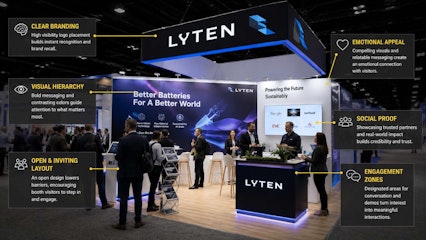
Use Visual Displays to Support Conversations
Your exhibition stand should strengthen - not replace - your communication.
Well-designed displays provide useful visual reference points throughout conversations.
Rather than overwhelming visitors with text, effective graphics reinforce your key messages using:
Strong headlines
Clear imagery
Product demonstrations
Easy-to-read graphics
Consistent branding
For exhibitors looking to create greater visual impact, illuminated LED display systems for retail branding can provide an effective backdrop that naturally attracts attention while supporting conversations with bright, professional presentation.
The best displays encourage discussion rather than distracting from it.
Communicate Consistently Across the Whole Team
Visitors often speak to more than one member of staff during an exhibition.
If different team members provide conflicting information, confidence can quickly disappear.
Before the event, ensure everyone understands:
Core messaging
Product information
Pricing structure
Target audience
Frequently asked questions
Key objectives
Consistency builds credibility.
Every member of the team should communicate the same core messages while still allowing their own personality to come through.
Pay Attention to Non-Verbal Communication
Communication extends far beyond spoken words.
Research consistently shows that body language strongly influences how messages are interpreted.
Visitors notice:
Posture
Facial expressions
Gestures
Tone of voice
Personal space
Energy levels
Positive non-verbal communication reinforces trust.
Similarly, signs of boredom, impatience, or distraction can discourage further conversation regardless of what is being said.
Remaining engaged throughout the day is essential, even during quieter periods.
Handle Difficult Questions Confidently
Not every conversation will be straightforward.
Visitors may challenge pricing, compare competitors, or raise objections.
The key is to remain calm and professional.
Avoid becoming defensive.
Instead:
Listen carefully.
Acknowledge the concern.
Answer honestly.
Explain your value clearly.
Offer additional information where appropriate.
Honest communication builds trust.
If you don't know the answer to a question, it's better to say you'll find out than provide inaccurate information.
Credibility is far more valuable than pretending to know everything.
End Conversations with Purpose
Many promising exhibition conversations lose momentum because they finish without any agreed next step.
Every interaction should conclude with a clear action.
Depending on the visitor, this might include:
Arranging a follow-up meeting
Booking a product demonstration
Sending further information
Connecting on LinkedIn
Scheduling a phone call
Adding them to your mailing list
Understanding that effective communication extends beyond the exhibition itself is fundamental to turning trade show conversations into leads, ensuring promising discussions continue after the event rather than ending when visitors leave the stand.
A clear follow-up process significantly improves conversion rates.
Common Communication Mistakes to Avoid
Even experienced exhibitors sometimes develop habits that discourage engagement.
Common mistakes include:
Talking Too Much
Visitors appreciate conversations rather than monologues.
Using Too Much Industry Jargon
Simple language improves understanding.
Focusing on Selling Too Early
Build rapport before discussing products in detail.
Ignoring Body Language
Visitors often communicate interest, or disinterest, without saying a word.
Interrupting
Allow visitors time to explain their needs fully.
Treating Every Visitor the Same
Adapt conversations to suit individual circumstances.
Avoiding these common mistakes immediately improves communication quality.
Preparing Your Team Before the Event
Excellent communication begins well before the exhibition opens.
Preparation helps teams feel confident and consistent.
Useful pre-show preparation includes:
Practising introductions.
Role-playing visitor scenarios.
Reviewing key product messages.
Agreeing lead qualification criteria.
Preparing responses to common questions.
Setting communication goals for the event.
The more familiar staff become with likely conversations, the more naturally they can respond during the exhibition.
Confidence always comes across in conversation.
Communication Doesn't End When the Event Finishes
Some of the most important communication happens after the exhibition.
Timely follow-up demonstrates professionalism while reinforcing the positive impression created during the event.
Follow-up communication should be:
Prompt
Personalised
Relevant
Helpful
Consistent with previous conversations
Rather than sending generic emails, reference specific discussions that took place at the exhibition.
This reminds prospects why they engaged with your business in the first place.
Strong follow-up often determines whether conversations become lasting customer relationships.
Great Conversations Create Great Results
Trade shows provide valuable opportunities to meet prospective customers face to face, but simply attracting visitors to your stand is only part of the equation. Meaningful conversations are what build trust, demonstrate expertise, and create the relationships that ultimately lead to new business.
The most successful exhibitors communicate with purpose. They listen carefully, ask thoughtful questions, adapt their approach to each visitor, and present information in a way that feels clear, relevant, and engaging. Combined with confident body language, consistent messaging, and well-prepared follow-up, these skills allow businesses to stand out in even the busiest exhibition environments.
Effective communication is not about delivering the perfect sales pitch. It is about creating genuine connections that leave visitors feeling understood and confident in your brand. When every interaction is treated as an opportunity to help rather than simply sell, trade shows become far more productive, memorable, and commercially successful.
posted in Trade Show Guide
Published: | Updated:


Written By:
Peter Symonds
Peter Symonds is Managing Director at Display Wizard, a Preston based display and exhibition stand provider.
He has over 15 years of experience in the large format print and exhibition industry and has helped grow Display Wizard into one of the UK's leading provider of high-quality display solutions.
Share this Event