 Trustpilot - Rated Excellent
 In-house Design & Print
 Express Production Options
 Instant Credit for Businesses
  Newsletter
No matter how good your product or service may be, customers need the right information before they decide to buy. Every interaction with your business contributes to their perception of your brand, from the first advert they see to the follow-up email they receive after making an enquiry.
This is where marketing assets come into play.
Marketing assets are the tools businesses use to communicate with potential customers, reinforce their brand, and support the sales process. Some are digital, others are physical, but together they create a consistent experience that helps customers move confidently from awareness to purchase.
Many businesses invest heavily in advertising while overlooking the assets that actually help convert interest into enquiries and sales. An engaging social media campaign may attract attention, but without strong supporting materials, many opportunities are lost before customers make a decision.
Building a competitive collection of marketing assets doesn't necessarily require a huge budget. It requires selecting the right resources, maintaining consistency, and ensuring every asset works together to support your wider marketing strategy.
Here are twelve marketing assets every business should consider.
1. A Professional Website
Your website is often the first place potential customers go after discovering your business.
Whether they arrive through search engines, social media, online advertising, or word-of-mouth recommendations, they expect to find clear information presented professionally.
An effective website should:
Clearly explain what your business offers.
Make navigation straightforward.
Load quickly across all devices.
Include clear calls to action.
Showcase trust signals such as reviews and accreditations.
Reflect your wider branding consistently.
Your website serves as the central hub for many other marketing activities, making it one of your most valuable long-term assets.
2. Strong Brand Guidelines
Consistency is one of the biggest contributors to brand recognition.
Without clear guidelines, marketing materials created over time can begin to look inconsistent, weakening customer recognition and trust.
Brand guidelines should cover:
Logo usage
Colour palette
Typography
Tone of voice
Photography style
Graphic elements
Messaging principles
These guidelines help ensure that every piece of marketing communicates a unified identity regardless of who creates it.
3. High-Quality Photography
People form opinions quickly based on visual impressions.
Professional photography helps businesses appear credible while allowing customers to better understand products, services, workplaces, and people.
Rather than relying solely on stock images, businesses benefit from creating their own image library featuring:
Products
Team members
Offices or premises
Customer interactions
Events
Behind-the-scenes content
Original photography creates authenticity while supporting multiple marketing channels simultaneously.
4. Customer Testimonials and Case Studies
Modern consumers actively seek reassurance before making purchasing decisions.
Testimonials and case studies provide independent evidence that your business delivers on its promises.
Well-written case studies demonstrate:
The customer's original challenge.
Your proposed solution.
The implementation process.
Measurable results.
The customer's experience.
These stories help prospective customers visualise how your business could solve similar problems for them.
5. Product and Service Brochures
Despite the growth of digital marketing, professionally designed brochures remain highly effective.
They allow customers to digest information at their own pace while providing a tangible reminder of your business.
A strong brochure should explain:
Products or services
Features
Benefits
Pricing where appropriate
Frequently asked questions
Contact information
Brochures are particularly useful during face-to-face meetings, exhibitions, and consultations where customers may wish to review information afterwards.
6. Sales Presentations
Every sales conversation benefits from clear visual support.
Professional presentation materials help sales teams communicate consistently while making complex information easier to understand.
Effective presentations typically include:
Company overview
Customer challenges
Proposed solutions
Supporting evidence
Case studies
Next steps
Standardised presentations also ensure that different members of the sales team communicate the same key messages.
7. Email Marketing Resources


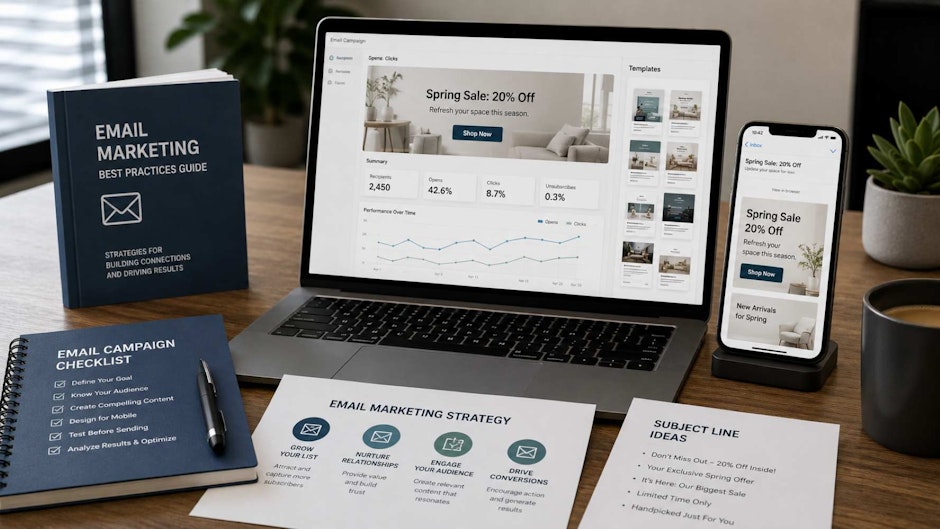
Email remains one of the most effective channels for nurturing relationships with prospects and existing customers.
However, successful email marketing requires more than simply sending newsletters.
Businesses should develop reusable assets such as:
Welcome email sequences
Product announcements
Customer onboarding emails
Follow-up templates
Promotional campaigns
Event invitations
These resources save time while maintaining consistency across customer communications.
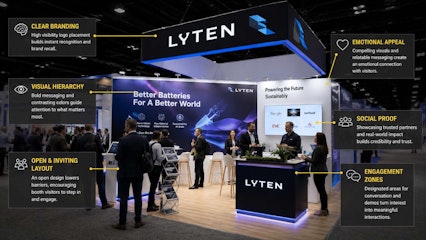
8. Exhibition and Event Displays
Trade shows and business events provide valuable opportunities to engage with customers face-to-face.
Professional display materials help businesses create strong first impressions while reinforcing brand identity.
This may include exhibition stands, signage, printed graphics, and portable roller banner displays for events, allowing businesses to present consistent branding across multiple locations while remaining flexible enough for regular exhibitions and promotional activities.
Well-designed display materials continue working throughout an event, attracting attention even when staff are engaged with other visitors.
9. Video Content
Video has become an increasingly valuable marketing asset because it allows businesses to explain ideas quickly while creating stronger emotional engagement.
Different types of business video include:
Product demonstrations
Customer testimonials
Company introductions
Educational content
Behind-the-scenes footage
Event highlights
Video content can often be repurposed across websites, social media, presentations, and email campaigns, increasing its long-term value.
10. Social Media Content Libraries
Creating social media content from scratch every day is both time-consuming and inefficient.
Instead, businesses benefit from building a library of reusable marketing assets that can be adapted over time.
Examples include:
Branded graphics
Product photography
Educational infographics
Quote cards
Customer success stories
Short video clips
Having these resources readily available allows marketing teams to respond more quickly while maintaining consistency.
11. Downloadable Resources
Offering genuinely useful downloadable resources helps businesses demonstrate expertise while generating valuable leads.
Popular examples include:
Guides
Checklists
Templates
White papers
Industry reports
Buying guides
These assets provide value before asking customers to make a purchase, helping establish trust early in the relationship.
When created thoughtfully, downloadable resources can continue generating enquiries for months or even years.
12. Marketing Collateral That Supports Every Stage of the Customer Journey
Individual marketing assets become significantly more valuable when they work together.
Customers rarely move directly from awareness to purchase after seeing a single advert. Instead, they engage with multiple pieces of information throughout their buying journey.
Essential marketing collateral for businesses includes every brochure, presentation, email, display, website page, and case study - all of which should reinforce the same overall message.
This integrated approach creates consistency, improves customer confidence, and supports smoother purchasing decisions.
Rather than viewing each asset in isolation, organisations should consider how every marketing resource contributes to a cohesive customer experience.
Keeping Your Marketing Assets Up to Date
Creating marketing assets is only the beginning.
Regular reviews help ensure materials remain accurate, relevant, and aligned with changing business objectives.
Questions worth asking include:
Is our branding still consistent?
Are contact details current?
Do case studies reflect our latest work?
Have customer needs changed?
Are older assets still supporting our objectives?
Refreshing existing materials is often more cost-effective than constantly producing entirely new ones.
Well-maintained assets continue delivering value long after they are first created.
Common Mistakes Businesses Make
Even businesses with strong marketing often overlook opportunities to improve their asset library.
Some of the most common mistakes include:
Creating Materials in Isolation
Individual assets should complement one another rather than competing for attention.
Prioritising Quantity Over Quality
A small collection of excellent resources is usually more valuable than dozens of inconsistent materials.
Ignoring Offline Marketing
Printed materials and exhibition assets remain highly effective in many industries.
Forgetting Existing Customers
Marketing assets should support retention as well as acquisition through onboarding materials, newsletters, educational resources, and customer communications.
Allowing Materials to Become Outdated
Old branding, inaccurate information, and expired case studies can undermine credibility.
Regular updates help ensure every asset reflects the business accurately.
Why Marketing Assets Create Long-Term Value
Unlike short-term advertising campaigns, many marketing assets continue delivering results for years.
A well-designed brochure may support hundreds of meetings.
A case study can help convert countless prospects.
A website may attract enquiries every day.
An exhibition display can be reused across multiple events.
Viewed collectively, marketing assets become long-term business investments rather than one-off marketing expenses.
The stronger your library becomes, the more efficiently future campaigns can be created.
Building a Marketing Toolkit That Supports Business Growth
Effective marketing is rarely built around a single campaign or individual piece of content. Instead, it depends on a collection of well-designed assets that work together to communicate your brand consistently at every stage of the customer journey.
From your website and brand guidelines to brochures, case studies, email campaigns, videos, and exhibition displays, each asset plays a specific role in attracting attention, building trust, and supporting sales conversations. When these resources share a consistent visual identity and messaging, they become significantly more powerful than they would in isolation.
The most competitive businesses don't simply create more marketing materials; they create better ones. They invest in resources that remain useful over time, reinforce one another, and continue generating value long after they have been produced.
By building a strong library of marketing assets and reviewing it regularly, businesses place themselves in a far stronger position to attract new customers, strengthen existing relationships, and compete confidently in increasingly crowded markets.
posted in Marketing Advice
Published: | Updated:


Written By:
Peter Symonds
Peter Symonds is Managing Director at Display Wizard, a Preston based display and exhibition stand provider.
He has over 15 years of experience in the large format print and exhibition industry and has helped grow Display Wizard into one of the UK's leading provider of high-quality display solutions.
Share this Event