 Trustpilot - Rated Excellent
 In-house Design & Print
 Express Production Options
 Instant Credit for Businesses
  Newsletter
Choosing between single and double-sided banners sounds like it should be straightforward, right? One side or two sides, how complicated can it be? But like most things in exhibition marketing, there's more to consider than you'd think.
The decision affects your budget, visibility, setup complexity, and ultimately how effectively your banner communicates with your audience. Get it right and you've maximised your investment. Get it wrong and you're either overpaying for features you don't need or missing opportunities because your banner's literally facing the wrong direction - it’s just as important as choosing the right banner size.
Let's break down the actual differences between single and double-sided banners, when each makes sense, and how to choose what's right for your specific situation.
What Actually Is the Difference?
Single-sided banners have graphics printed on one side only. The reverse is either blank or shows a mirror image of the front (which looks rubbish and unprofessional, so most people avoid this).
Double-sided banners have different graphics printed on both sides. Two completely separate designs facing opposite directions, giving you visibility from multiple angles.
The construction differs too. Single-sided banners use standard banner material with printing on one face. Double-sided banners typically use blockout material sandwiched between two printed layers, preventing the graphics from showing through and creating that see-through effect.
When Single-Sided Makes Perfect Sense
When you’re ordering pull-up roller displays for events, you need to think about the configuration of the space where you’re going to be set up. If your banner's going against a wall, in a booth where people only approach from one direction, or anywhere with a defined viewing angle, single-sided is your answer. Why pay for a second side nobody's going to see?
Retail environments often work brilliantly with single-sided banners. Your banner sits inside your shop window or against a wall, facing customers as they walk past. The back doesn't matter because nobody's looking at it.
Exhibition booths with back walls are another natural fit. Your banner faces outward into the aisle where foot traffic flows. The back faces your booth wall where it's invisible to everyone except your own staff.
Budget-conscious situations lean toward single-sided for obvious reasons. If you need multiple banners and money's tight, single-sided gives you more units for your spend.
When Double-Sided Is Worth the Investment
Freestanding locations where people approach from multiple directions are where double-sided banners earn their keep. Think about a banner in the middle of a shopping centre aisle, at a junction where foot traffic flows from multiple directions, or anywhere without a wall or backdrop.
Trade show islands or peninsula booths where your space is accessible from multiple sides need double-sided banners. People approach from different angles and you want visibility from all of them.
Outdoor events, festivals, and street marketing often benefit from double-sided banners. Foot traffic isn't controlled or unidirectional - people wander from all directions and you want to catch everyone's eye.
High-traffic environments where maximising visibility matters justify the extra cost. If your banner's in a busy location and every additional impression has value, the second side pays for itself through increased exposure.
The Cost Difference
Double-sided banners typically cost 40-70% more than single-sided equivalents. The exact premium depends on size, material, and print specifications, but expect to pay significantly more.
That premium buys you two completely separate designs, blockout material to prevent show-through, and potentially double the visibility depending on location. Whether that's worth it comes down to your specific placement and objectives.
For businesses needing multiple banners, the cost difference multiplies. Five single-sided banners versus five double-sided banners is a substantial budget difference that needs justifying with genuine usage benefits.
Material and Durability Considerations
Single-sided banners use standard PVC, fabric, or vinyl materials. They're lightweight, easy to transport, and straightforward to work with.
Double-sided banners require blockout material or layered construction to prevent graphics showing through from the opposite side. This makes them slightly heavier and bulkier, though still manageable for most applications.
The durability isn't dramatically different for either type. Both handle normal indoor use brilliantly. For outdoor applications, weatherproofing matters more than whether the banner is single or double-sided.
Design Complexity
Single-sided banners mean one design to approve, one round of revisions, one proof to sign off. Simple.
Double-sided banners double your design workload. You've got two separate sides to design, and they need to work both independently and as a cohesive unit. This means more design time, potentially more revisions, and more opportunity for mistakes.
Some businesses use identical designs on both sides, which defeats much of the purpose of double-sided printing. If you're doing this, question whether you actually need double-sided at all.
Others use complementary designs - maybe brand messaging on one side and specific product information on the other. This maximises the value of having two sides but requires thoughtful design planning.
Setup and Installation
Single-sided banners are dead easy. Unroll, clip into the stand, job done. The lightweight material and simple structure means setup takes minutes.
Double-sided banners are marginally more complex due to increased weight and bulk, but we're talking seconds difference, not meaningful additional effort. Any decent banner stand handles double-sided graphics without issues.
The real difference comes in transport and storage. Double-sided banners take up slightly more space and weigh a bit more, which might matter if you're hauling multiple banners to events regularly.
Versatility and Reusability


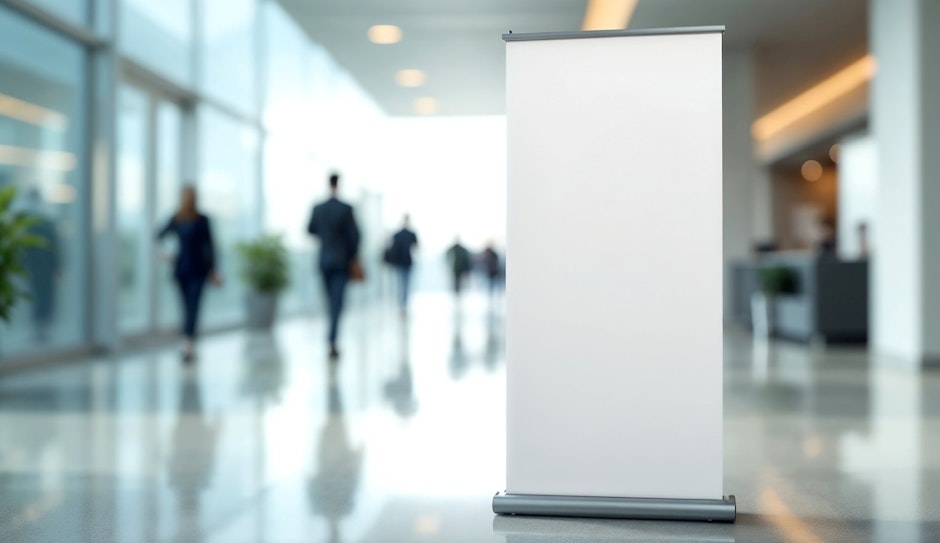
Single-sided banners work perfectly for their intended applications but can't adapt to situations where dual visibility would help. If you suddenly need a freestanding display, your single-sided banner doesn't cut it.
Double-sided banners offer more flexibility. They work in single-sided situations (you just ignore the back) and in dual-sided situations. This versatility might justify the extra cost if your display needs vary.
Visibility and Impact
In locations where both sides are visible, double-sided banners genuinely double your impressions. Everyone approaching from either direction sees your message.
But this only matters if both sides actually get seen. A double-sided banner facing a wall wastes half its potential. Be honest about your typical setup scenarios.
Single-sided banners in the right locations often outperform poorly positioned double-sided banners. It's not about having two sides - it's about those sides being visible to your target audience.
Different Applications, Different Needs
Retail environments generally favour single-sided. Your banners work against walls, in windows, or in defined customer flow paths where one viewing direction dominates.
Events and exhibitions vary. Wall spaces and backed booths work with single-sided. Island booths, central positions, and freestanding displays need double-sided.
Outdoor marketing and street events lean heavily toward double-sided unless you're placing banners against buildings or fences. Foot traffic rarely flows in only one direction outdoors.
Making the Decision
Ask yourself these questions: Where will the banner be positioned most often? Can people approach from multiple directions, or is there one primary viewing angle? What's my budget, and does the extra cost of double-sided justify the added visibility? Am I designing one banner or multiple - how does the cost scale?
If the banner's primarily going in locations with defined viewing angles (against walls, in backed booths, retail windows), single-sided makes sense and saves money.
If you need visibility from multiple directions regularly (island booths, central event spaces, outdoor locations), double-sided justifies the investment.
If you're unsure or your needs vary, double-sided provides flexibility at the cost of higher upfront investment.
Common Mistakes to Avoid
Don't buy double-sided banners and then consistently place them against walls. You're wasting money on a feature you're not using.
Don't buy single-sided banners and then complain when they don't work in freestanding positions. The back of a single-sided banner looks rubbish - blank material or see-through printing. Plan your purchases around actual usage.
Don't assume double-sided is automatically better because it costs more. It's better when both sides get seen. Otherwise, it's just more expensive.
Environmental Considerations
Single-sided banners use less material and therefore have slightly lower environmental impact. If sustainability matters to your brand, this might factor into your decision.
That said, the difference is marginal. The bigger environmental consideration is whether you're designing banners for reusability or treating them as disposable. Both single and double-sided banners can be produced with recyclable materials and used for years if designed with longevity in mind.
Testing and Iteration
If you're new to banner marketing and unsure which type you need, start with single-sided. It's cheaper and works for most applications. Test it in your typical settings and see if you're missing opportunities where a second side would help.
You can always upgrade to double-sided for specific applications later once you understand your actual needs. Starting with the more expensive option and discovering you didn't need it stings more than starting cheap and upgrading strategically.
The Bottom Line
Single-sided banners work brilliantly for applications with defined viewing angles and controlled traffic flow. They're cheaper, simpler to design, and perfectly adequate when people only approach from one direction.
Double-sided banners justify their premium cost when visibility from multiple angles matters - freestanding displays, island booths, outdoor events, or anywhere foot traffic approaches from various directions.
The right choice isn't about which is objectively better. It's about matching the banner type to your specific usage, locations, budget, and visibility requirements. Be honest about how you'll actually use the banner, and choose accordingly. Your wallet and your marketing effectiveness will both thank you.
posted in Buyer's Guides
Published: | Updated:


Written By:
Peter Symonds
Peter Symonds is Managing Director at Display Wizard, a Preston based display and exhibition stand provider.
He has over 15 years of experience in the large format print and exhibition industry and has helped grow Display Wizard into one of the UK's leading provider of high-quality display solutions.
Share this Event