 Trustpilot - Rated Excellent
 In-house Design & Print
 Express Production Options
 Instant Credit for Businesses
  Newsletter
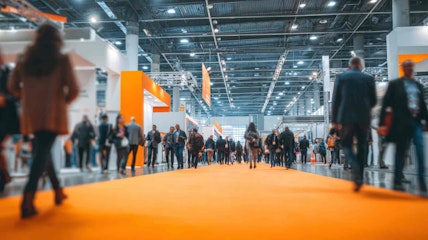
Seven seconds. That's the window most research points to when it comes to first impressions in face-to-face settings. At a trade show, where a visitor is walking past potentially hundreds of stands in the course of a few hours, that window might be shorter. The decision to stop, slow down, or look away is made almost entirely on the basis of what someone sees before they've heard a single word from your team.
This is both a challenge and an opportunity. It's a challenge because it demands that your visual presence does serious work before your people can. It's an opportunity because most exhibitors underestimate this and get it wrong in predictable, avoidable ways.
Why Do First Impressions Matter More At Trade Shows Than Other Settings?
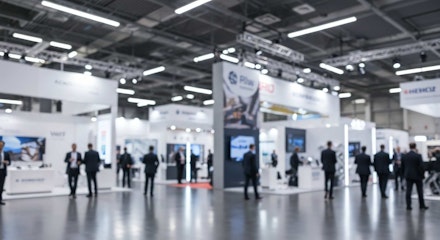
In most sales and marketing contexts, you have some control over the conditions under which a prospect encounters your brand for the first time. At a trade show, you have almost none. Visitors are tired, over-stimulated, and making constant micro-decisions about where to direct their attention. Your stand is competing with dozens or hundreds of others, often within direct eyeline, for a share of attention that is genuinely limited.
The stands that win that competition aren't necessarily the ones with the biggest budgets. They're the ones that communicate something clear and compelling at a glance - who they are, what they offer, and why that's worth a closer look - before a visitor has consciously engaged. The stands that lose it are typically the ones that require effort to understand.
First impressions at trade shows are also disproportionately sticky. A visitor who walks past your stand without stopping is unlikely to double back unless something specifically draws them. The initial moment is, in most cases, the only moment you get.
What Are The Visual Elements That Make The Strongest First Impression?
Clarity over complexity. This is the principle that most poorly performing trade show stands violate. The impulse to include everything - every product line, every service, every award and accreditation - produces a visual result that communicates nothing because it's asking the viewer to do too much work.
The stands that stop people typically have one strong visual hook: a bold headline that speaks directly to a problem or desire, a striking image, a colour palette that's confident and distinctive rather than cautious and corporate. Everything else is secondary and can be delivered by your team once a visitor has stopped.
Typography scale matters enormously. Your headline should be readable from at least five metres away. If it isn't, it's not working as a headline; it's working as body copy, which no one reads from a distance.
How Does Staff Behaviour Shape The First Impression?



Your display creates the first impression; your team either confirms or contradicts it. A stand with excellent visuals staffed by people on their phones, talking exclusively to each other, or radiating discomfort creates a dissonance that visitors resolve by walking on. The visual promise is undermined by the human reality.
The body language of your team - open posture, genuine eye contact, positioning toward the aisle rather than toward the back of the stand - signals accessibility in ways that are processed before any conscious thought. Visitors decide whether a stand feels welcoming in a fraction of a second, and that decision is driven as much by the people they see as the display behind them.
Brief your team on this specifically. It's not something that can be assumed. Even experienced salespeople benefit from a clear briefing about how they should be presenting in the first ten seconds of a visitor's approach.
What Common Mistakes Damage First Impressions At Trade Shows?
Clutter is the most widespread. Stands overloaded with product samples, literature, giveaways, and promotional materials create an impression of chaos rather than confidence. A cluttered stand suggests a brand that hasn't made decisions - and if you haven't made decisions about your own presentation, why would a visitor trust you to make decisions for them?
A branded stand with a coherent visual hierarchy, clear messaging, and deliberate negative space communicates professionalism before a word is spoken. Less, presented well, consistently outperforms more, presented messily.
Knowing how to maximise visibility at trade shows as a whole - from positioning to display choices - gives you the framework to avoid these mistakes systematically rather than hoping the stand looks right on the day.
How Do Display Materials Contribute To First Impressions?
The quality of your printed materials is read as a signal of the quality of your business. Faded graphics, misaligned prints, or displays that are visibly worn send a message that is difficult to overcome in the subsequent conversation. High-definition printing on quality materials does the opposite: it communicates investment, attention to detail, and a brand that takes itself seriously.
Professional banners for trade shows and displays serve as the backbone of most exhibition setups because they're versatile, replaceable, and - when produced properly - capable of making a strong visual impact at a fraction of the cost of a fully custom build.
Partner With Display Wizard
Display Wizard have been helping UK businesses make strong first impressions at trade shows for over twenty years. All printing is done in-house on high-definition EFI printers, with a graphic design team available to work with you from initial concept through to print-ready artwork. Products come with at least a one-year hardware guarantee, many with a lifetime guarantee, and fast UK-wide delivery means you're exhibition-ready when you need to be.
If your trade show presence deserves better than it's currently getting, start with Display Wizard.
posted in Buyer's Guides
Published: | Updated:


Written By:
Peter Symonds
Peter Symonds is Managing Director at Display Wizard, a Preston based display and exhibition stand provider.
He has over 15 years of experience in the large format print and exhibition industry and has helped grow Display Wizard into one of the UK's leading provider of high-quality display solutions.
Share this Event