 Trustpilot - Rated Excellent
 In-house Design & Print
 Express Production Options
 Instant Credit for Businesses
  Newsletter
You can spend thousands on a beautifully designed stand, have the most compelling product in your industry, and still walk away from a trade show with nothing to show for it. Poor positioning is that powerful. Where your stand sits within an exhibition hall, and how you orient it within that space, shapes everything that follows: foot traffic, dwell time, the quality of conversations you have, and ultimately the return you get on the whole exercise. As the old adage goes, location, location, location.
Unfortunately, it tends to be the case that positioning isn't something most exhibitors think about strategically - and that's precisely why the ones who do tend to outperform.
How Does Exhibition Hall Layout Affect Visitor Behaviour?
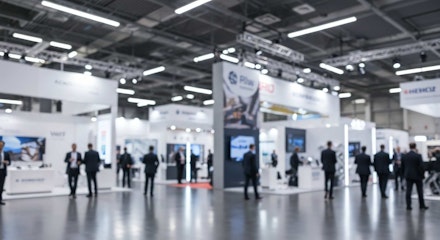
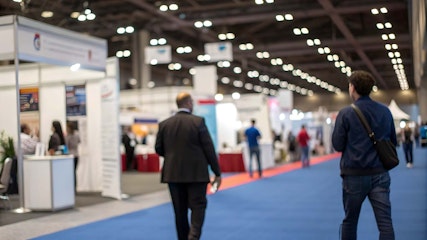
Trade show visitors are not random. They move in predictable patterns shaped by the hall's architecture, the location of the entrances, and where the anchor exhibitors and features are placed. Most visitors enter and instinctively turn right, mirroring the behaviour observed in retail environments. They tend to move along the perimeter before working their way through interior aisles, and their attention is highest in the first twenty minutes after entry, before decision fatigue and visual overload begin to set in.
This means that stands near the main entrance, along the right-hand perimeter, or adjacent to features like food areas, seminar stages, or restrooms receive disproportionately high footfall. It also means that the interior of a large exhibition hall, particularly at the far end, can be surprisingly quiet regardless of how good the stands there look.
Understanding the hall layout before you choose or request your spot is not optional if you're serious about results. Most organisers publish floor plans well in advance, and you should study them with the same attention you'd give to any other strategic decision in your marketing calendar.
What Makes A Good Location Within An Exhibition Hall?
High natural footfall is the starting point, but it's not the only consideration. Corner positions are consistently among the most valuable spots at any trade show because they offer two open sides, reducing the sense of enclosure and making it easier for visitors to approach from multiple directions without feeling committed to stopping. Inline or row stands, sandwiched between neighbours on both sides, naturally limit approach angles and can feel less inviting even when well designed.
Island stands - those with open access on all four sides - represent the premium option for obvious reasons, though they come at a cost and demand a stand design that works from every angle rather than relying on a single face.
Avoid positioning near the loading bays or emergency exits, both of which create disruption and are typically low traffic. Being next to a very dominant competitor can also be counterproductive unless your brand is strong enough to benefit from the comparison.
How Should You Orient Your Stand Within Your Space?


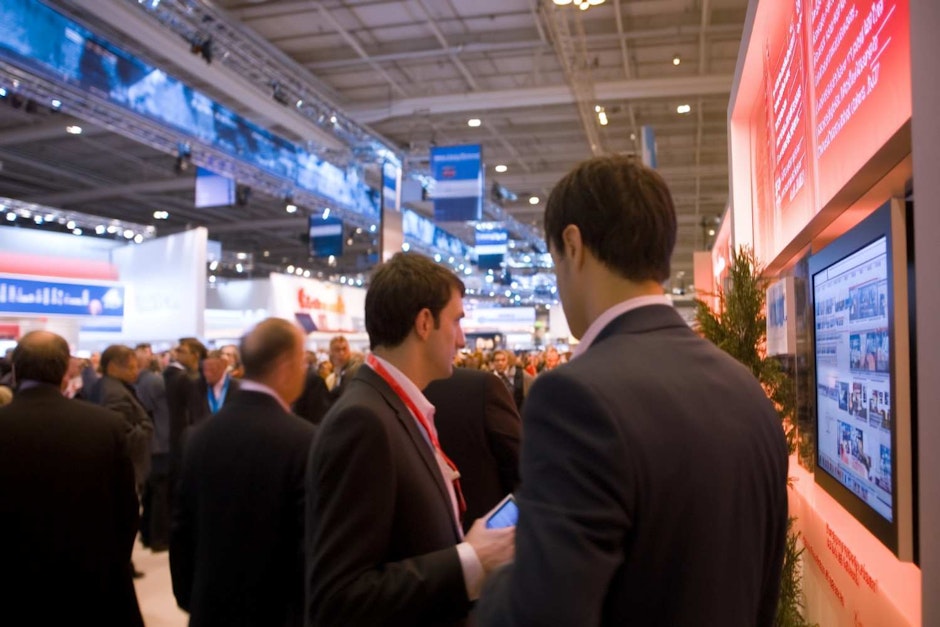
Orientation is about directing visitors toward you rather than past you. The open face of your stand should face the direction from which the majority of foot traffic approaches. Barriers - physical or psychological - should be eliminated wherever possible: a table across the front of your stand acts as a subconscious boundary that reduces engagement, whereas an open floor plan with materials positioned to draw people in creates a very different dynamic.
Height matters too. Tall backdrops and overhead signage extend your stand's visual reach far beyond your physical footprint, allowing visitors to identify you from a distance and navigate toward you intentionally. This is particularly relevant in large halls where visual noise from competing stands is significant.
For exhibitors working with smaller allocated spaces, you need to be maximising small booth spaces effectively - because when you can't control your location perfectly, you can control how your stand commands attention within it.
Does Your Stand Design Affect How Positioning Works?
Completely. A stand designed with a single strong visual face performs very differently depending on which direction most visitors approach from. A design that works in the round - consistent branding on multiple sides, clear messaging that reads well at an angle - gives you more flexibility and performs better in positions where visitor flow isn't coming from a single predictable direction.
Lighting is a significant variable here. A well-lit stand in a poorly lit area of the hall becomes a natural focal point. The contrast does the positioning work for you in a way that no amount of premium floor space can replicate if the stand itself is visually flat.
The portability of your display materials also affects how you can respond to on-the-day conditions. Stands built from lightweight roller banners for exhibitions and events give you the flexibility to reconfigure quickly if the flow of the hall doesn't match what you expected - something that happens more often than most exhibitors plan for.
Work With Display Wizard
Display Wizard have been supplying exhibition stands across the UK for over twenty years, printing everything in-house on high-definition EFI printers with a graphic design team that works with you from concept to final output. Whether you need a single roller banner or a fully configured modular stand system, every product comes with at minimum a one-year hardware guarantee, with many carrying a lifetime guarantee.
Fast UK-wide delivery means you're not scrambling in the days before your event. Browse the full range at Display Wizard and build a display that earns its position in the hall.
posted in How To Guides
Published: | Updated:


Written By:
Peter Symonds
Peter Symonds is Managing Director at Display Wizard, a Preston based display and exhibition stand provider.
He has over 15 years of experience in the large format print and exhibition industry and has helped grow Display Wizard into one of the UK's leading provider of high-quality display solutions.
Share this Event