 Trustpilot - Rated Excellent
 In-house Design & Print
 Express Production Options
 Instant Credit for Businesses
  Newsletter
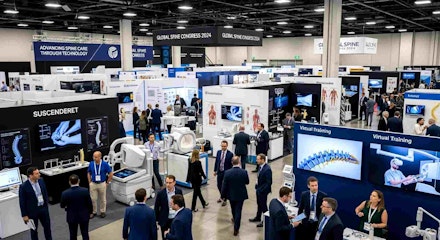
The bar for what constitutes a good trade show experience has risen considerably in the last decade. Visitors are more experienced, more selective, and better at identifying stands worth their time from stands that will waste it. The passive display model - stand here, have your brochure, we'll tell you about our product - works less and less well as the baseline for what visitors expect has shifted.
Interactive experiences are the response to this shift, and they don't require a budget that only large brands can access.
Why Does Interactivity Matter At Trade Shows?
Passive observation and active participation produce fundamentally different outcomes in terms of memory, engagement, and emotional response. A visitor who watched a product demonstration is considerably less likely to recall it vividly than a visitor who participated in one. This isn't a marketing opinion; it's how memory encoding works. The brain assigns higher significance to experiences in which it was actively involved, and that higher significance translates into more vivid recall, stronger brand associations, and higher likelihood of follow-up behaviour.
At a trade show, where your stand is competing with dozens of others for a share of the visitor's subsequent memory, the difference between being remembered clearly and being a vague presence in the background is the difference between a lead and a lost opportunity.
Interactivity also extends dwell time. Once a visitor is actively engaged - in a demonstration, a game, a conversation with genuine back-and-forth - they stay longer. And longer stays produce better conversations, more information exchange, and higher-quality leads.
What Kinds Of Interactive Experiences Work At Trade Shows?
The most effective interactive elements share a common characteristic: they're connected to your product or service rather than just being entertainment for entertainment's sake. A game that has nothing to do with your offering might attract a crowd, but it attracts the wrong crowd - people who came for the game, not your brand.
Product demonstrations that involve the visitor rather than just the demonstrator are a high-value starting point. Letting someone use your software, try your product, or test your service transforms their relationship to it from conceptual to experiential. Questions arise naturally, objections surface, and the sales conversation is advanced significantly by what would otherwise be a passive viewing.
For brands that are selling ideas rather than physical products, interactive elements might take the form of a live assessment or diagnostic - a short set of questions that produces a personalised result the visitor can take away. This creates immediate value, establishes your expertise, and gives you a reason to follow up that's specific to that visitor's situation.
How Does Technology Enhance Interactive Trade Show Experiences?


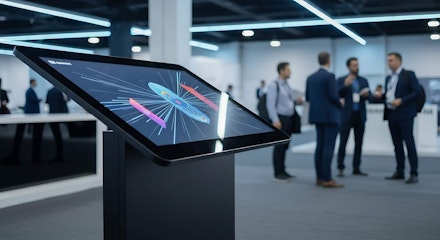
Technology is a useful tool when it serves the interaction rather than becoming the interaction itself. Touchscreen displays that let visitors navigate your product range or explore case studies give agency without requiring a staff member to be present at every moment. QR codes that link to specific content - a video, a case study, a booking page - bridge the physical stand experience with a digital journey the visitor can continue after they leave.
Augmented reality (AR) is increasingly accessible for trade show applications and particularly powerful for brands with physical products that are too large or complex to bring to an exhibition. AR that lets a visitor visualise your product in their own environment, or a demonstration of a process that couldn't otherwise be shown, creates a memorable moment that very few other stands in the hall will be providing.
The key discipline is ensuring that whatever technology you deploy is reliable. An interactive element that crashes, freezes, or requires staff support to operate defeats the purpose and creates a worse impression than no interactivity at all.
How Does Your Physical Environment Enable Or Restrict Interactivity?
Layout and display choices determine whether interaction is physically possible. A stand with a table across the front, limited floor space, and displays that crowd the available area leaves no room for a visitor to participate in anything. The spatial decision to preserve open floor space for demonstration and engagement is a prerequisite for any interactive experience.
Display materials that create enclosure and atmosphere - rather than simply providing a backdrop - help signal that this is a space worth entering rather than passing. Illuminated signage panels for marketing purposes in particular change the quality of light within a stand space in ways that make it feel distinct from the exhibition hall around it, which enhances the sense that entering is crossing into something different and worth exploring.
For a broader understanding of how the physical environment and interactive design work together, the relationship between display choices and creating interactive and engaging trade show experiences is worth thinking through before you commit to a stand configuration.
How Do You Brief Your Team For Interactive Engagement?
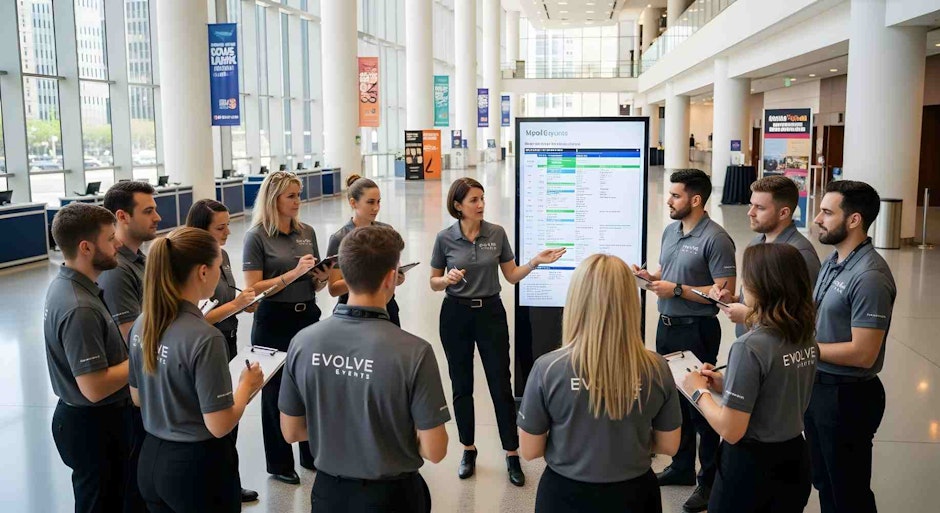
The best interactive element in the world underperforms if your team doesn't know how to use it as an opening rather than a destination. An interactive demonstration should be a platform for conversation, not a replacement for it. Brief your team on how to invite visitors into the experience, what questions to ask during it, and how to transition from the interactive element into a proper qualifying conversation.
The visitor who just spent two minutes using your product or exploring your service is primed. They've invested time, formed impressions, and have questions. That's the moment for your most experienced person to move in, not for the interaction to end with a brochure.
Partner With Display Wizard
Creating an environment that enables genuine interaction starts with displays that establish the right atmosphere and visual presence. Display Wizard's range - from modular stand systems to LED lightboxes and fabric displays - is all produced in-house on high-definition EFI printers, with a graphic design team that can help you translate your interactive concept into a display environment that supports it.
With over twenty years of experience and a product range that covers everything from portable displays for smaller events to full custom stand hire, Display Wizard has what you need to build an exhibition presence that visitors actually engage with.
posted in Marketing Advice
Published: | Updated:


Written By:
Peter Symonds
Peter Symonds is Managing Director at Display Wizard, a Preston based display and exhibition stand provider.
He has over 15 years of experience in the large format print and exhibition industry and has helped grow Display Wizard into one of the UK's leading provider of high-quality display solutions.
Share this Event