Trustpilot - Rated Excellent
 In-house Design & Print
 Express Production Options
 Instant Credit for Businesses
 Newsletter
Signage is any visual display used to communicate information, directions, instructions, warnings, branding or promotional messages. It includes everything from shop signs and wayfinding signs to pavement signs, safety notices, exhibition graphics and digital displays.
The right type of signage depends on where it will be used, how far away it needs to be read from, how long it needs to last and whether the message is permanent or regularly updated.
What is signage?
In simple terms, signage is a visual communication tool. It combines words, symbols, colours, images or graphics to help people understand a message quickly.
Businesses use signage to attract attention, identify locations, promote products, guide visitors, communicate safety information and reinforce their brand.
What is signage used for?
Most signage serves one or more of these purposes:
Promotion: advertising products, services, events, offers or campaigns.
Branding: helping customers recognise a business or location.
Wayfinding: directing people through buildings, venues, campuses or events.
Information: communicating opening times, prices, menus, instructions or notices.
Safety: warning about hazards, restrictions or required behaviour.
Identification: marking entrances, departments, rooms, stands or facilities.
Common types of signage
Promotional signage
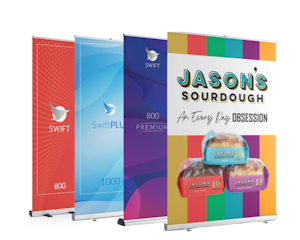
Promotional signs are designed to attract attention and communicate an offer or campaign. Examples include advertising banners, posters, window graphics and pavement signs.
Event and exhibition signage
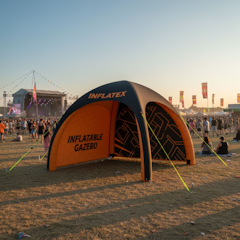
Trade shows and events use signage to identify brands, communicate key messages and help visitors understand a stand quickly. Common formats include roller banners, pop up displays, printed backdrops and directional signs.
Wayfinding and directional signage
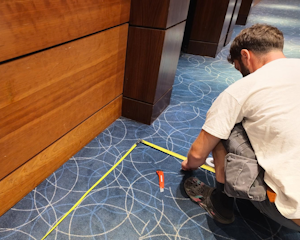
Wayfinding signs help people move through a space. They can identify entrances, exits, rooms, facilities and routes, and are widely used in offices, hospitals, schools, shopping centres, venues and outdoor events.
Informational and safety signage
Informational signs communicate instructions, notices and operational information. Safety signage is a more specific category used to communicate hazards, restrictions and required actions.
Brand and identification signage
Brand signage helps identify a business or location using names, logos, colours and other recognisable visual elements. Consistency across signs, displays and customer touchpoints helps make a brand easier to recognise.
Types of signage at a glance
| SIGNAGE TYPE | PRIMARY PURPOSE | COMMON EXAMPLES | TYPICAL ENVIRONMENT |
|---|---|---|---|
| Promotional | Advertise an offer, product or campaign | Posters, banners, pavement signs | Retail, hospitality, events |
| Wayfinding | Help people navigate | Directional arrows, entrance and exit signs | Venues, offices, hospitals, campuses |
| Informational | Communicate practical information | Opening times, menus, notices | Retail, workplaces, public spaces |
| Safety | Communicate hazards or required actions | Warning and instruction signs | Workplaces, public buildings, sites |
| Identification | Identify a brand, location or department | Shop signs, reception signs, room signs | Businesses and organisations |
| Event and exhibition | Promote brands and guide visitors | Roller banners, backdrops, stand graphics | Trade shows, conferences, events |
| Digital | Display changeable electronic content | LCD screens, LED displays, digital menu boards | Retail, hospitality, venues, workplaces |


Printed signage vs digital signage
Printed signage uses a physical printed surface such as paper, vinyl, fabric, Foamex, Dibond or Correx. It is often the simplest option when the message will remain unchanged for a period of time.
Digital signage uses screens or LED displays to show content electronically. It is useful when messages need to change frequently, when motion or video is important, or when different content needs to be scheduled throughout the day.
Neither format is automatically better. The right choice depends on the environment, required lifespan, budget, viewing distance and how often the message changes.
What materials are used for signage?
The material should match the location and expected lifespan of the sign.
Paper and poster media: suitable for posters, frames and changeable promotional messages.
Vinyl: commonly used for banners, stickers, window graphics and applied graphics.
Foamex: a lightweight rigid PVC board used for indoor signs and many short to medium-term applications.
Correx: a lightweight fluted plastic board often used for temporary signage.
Dibond: an aluminium composite material suited to more durable rigid signage.
Fabric: widely used for exhibition graphics, backdrops, lightboxes and portable displays.
How do you choose the right signage?
Start with the purpose rather than the product. Ask:
Where will the sign be used?
Will it be indoors or outdoors?
How far away will people view it from?
How long does it need to last?
Will the message need to change?
Does the sign need to be portable?
Does it need to fit an existing frame, stand or fixing?
For example, a short-term promotional message outside a shop may suit a pavement sign with a replaceable poster, while a more permanent exterior sign may need a rigid weather-resistant material.
Custom printed signage from Display Wizard
Display Wizard supplies printed signage and display products for retail, events, exhibitions, workplaces and outdoor promotions. Our range includes banners, posters, rigid board printing, pavement signs, display stands and exhibition graphics.
Because the display hardware and print work together, always check the product specification before creating artwork. Important details can include the finished graphic size, visible area, bleed, safe area, substrate and whether the display is intended for indoor or outdoor use.
Frequently asked questions
What does signage mean?
Signage means visual communication displayed in a physical or digital space. It can provide information, directions, warnings, branding or promotional messages.
What are examples of signage?
Examples include shop signs, posters, pavement signs, banners, directional signs, safety signs, menu boards, window graphics, exhibition graphics and digital display screens.
What are the main types of signage?
Common categories include promotional, directional, informational, safety, identification, event, indoor, outdoor and digital signage.
What is the difference between a sign and signage?
A sign is an individual display. Signage is the broader term used for signs or a system of signs within a location, business or environment.
What is wayfinding signage?
Wayfinding signage helps people navigate through a place by identifying routes, destinations, entrances, exits and facilities.
What is digital signage?
Digital signage displays information electronically using screens or LED displays. Content can be changed without replacing a printed graphic, making it useful for frequently updated messages.
posted in Marketing Advice
Published: | Updated:


Written By:
Matthew Pavli
Matthew Pavli is a Digital Marketing Consultant at Display Wizard, a UK-based supplier of professional banner stands, pop up displays and exhibition stands. He helps entrepreneurs and businesses across the country stand out at trade shows and events.
Share this Event